semi合集-English.pdf - 第1870页
SEMI E53-0704 © SEMI 1996, 2004 10 Attribute Name Definition Rqmt Access Form EventSource The object specifier which is the source of the event, see Section 7.1 and SEMI E39 (Object Services Standard). N RO Formatted Tex…
SEMI E53-0704 © SEMI 1996, 2004 9
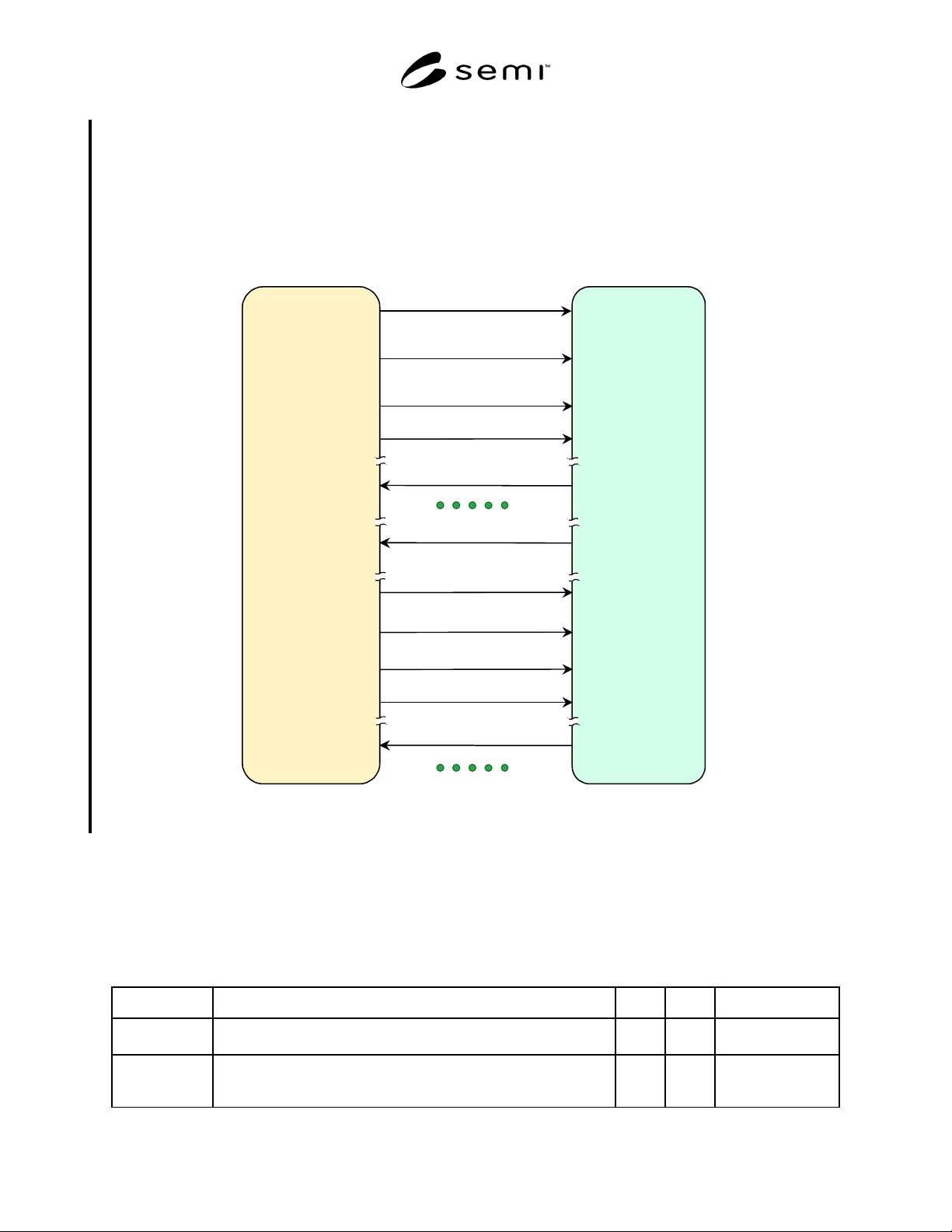
7.3.4 Event Reporting with Non-predefined CollectionEvent Object — Additional capabilities of SEMI E39 (OSS)
give Event Reporting standard more flexibility. For example, CollectionEvent objects can be created while
equipment is running if the equipment has been installed the capability. If event sources are dynamically generated
as process job, CollectionEvent objects must be created after the source is generated. If a user is not interested in
such source, this capability is not required. However, if the user needs to get event report for such source, the
capability is useful. This document doesn’t recommend nor suppress that but it’s depending on users.
Creat e
(Collect ionEvent object )
Dat Report Cr eat e (x n)
FACTORY
(Ser vice User )
Cr eat es a
Collect ionEvent obj ect
A Collect ionEvent
obj ect is cr eat ed.
Ret ur ns obj ect I D
EQUI PMENT
(Ser vice Pr ovider )
Dat aRepor t obj ect (s)
is(ar e) cr eat ed.
Ret ur ns obj ect I D
Cr eat es Dat aRepor t
obj ect (s)
Collect ionEvent Link (x n)
Dat aRepor t obj ect (s)
is(ar e) linked.
Links Dat aRepor t
obj ect (s)
Set At t ribut e
(Enabled=TRUE)
Collect ionEvent
obj ect is Enabled.
Enables
Collect ionEvent
Event Report Send
Event happens.
Linked Dat aRepor t (s)
value(s) ar e acquir ed
Cor r esponding
Pr ocedur e begins
Event Report Send
Event happens.
Linked Dat aRepor t (s)
value(s) ar e acquir ed
Cor r esponding
Pr ocedur e begins
Collect ionEvent
obj ect is Disabled.
Disables
Collect ionEvent
Collect ionEvent Unlink (x n)
Dat aRepor t obj ect (s)
is(ar e) unlinked.
Unlinks Dat aRepor t
obj ect (s)
Collect ionEvent Link (x n)
Dat aRepor t obj ect (s)
is(ar e) linked.
Links Dat aRepor t
obj ect (s)
Collect ionEvent
obj ect is Enabled.
Enables
Collect ionEvent
Event Report Send
Event happens.
Linked Dat aRepor t (s)
value(s) ar e acquir ed
Cor r esponding
Pr ocedur e begins
Set At t ribut e
(Enabled=FALSE)
Set At t ribut e
(Enabled=TRUE)
Figure 9
Non-predefined Collection Event Scenario
8 Specification
8.1 Object Definitions
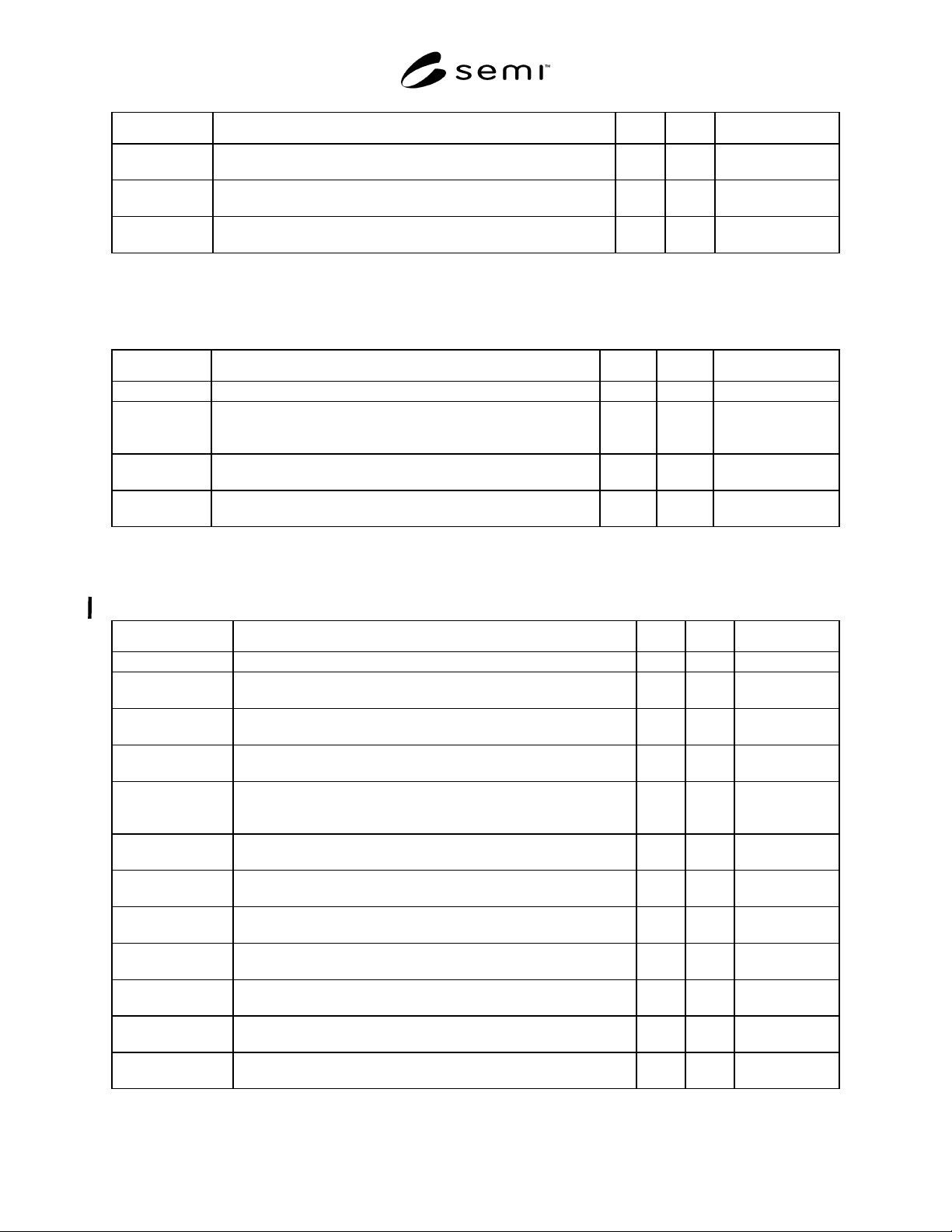
8.1.1 Collection Event Object — A collection event object generates an event report each time it is triggered by a
collection event from an event source. An event report contains the data samples from zero or more data reports to
which it is linked by the collection event object.
Table 1 Collection Event Object Attribute Definitions
Attribute Name Definition Rqmt Access Form
ObjType Specification of the Object Type of “Collection Event.” Y RO Text =
“COLLEVENT”
ObjID Object Identifier, within the scope of the event source object, for the
Collection Event which is the trigger for the generation of an event
report.
Y RO Text
SEMI E53-0704 © SEMI 1996, 2004 10
Attribute Name Definition Rqmt Access Form
EventSource The object specifier which is the source of the event, see Section 7.1
and SEMI E39 (Object Services Standard).
N RO Formatted Text
DataReportList Ordered list of data report object identifiers (text) to be sampled and
sent with the event report.
Y RO List
Enabled If this flag is cleared or false, then event reports will not be generated
and sent when the associated Collection Event is detected.
Y RW Boolean
8.1.2 Data Report Object — The data report is part of the event reporting setup. It references zero or more attributes
of a data source object and may be linked to zero or more event reports or trace reports.
Table 2 Data Report Object Attribute Definitions
Attribute Name Definition Rqmt Access Form
ObjType Specification of the Object Type of “Data Report.” Y RO Text = “DATARPT”
ObjID The object identifier of a pre-defined data report or one defined
dynamically by the service user. ReportIDs are unique for
eachservice user.
Y RO Text
DataSource The object specifier of the object which has the attributes to be
reported, see Section 7.1.
N RO Formatted Text
AttrList An ordered list of attribute names from the Data Source object
which will be sampled for inclusion in the data report.
Y RW List
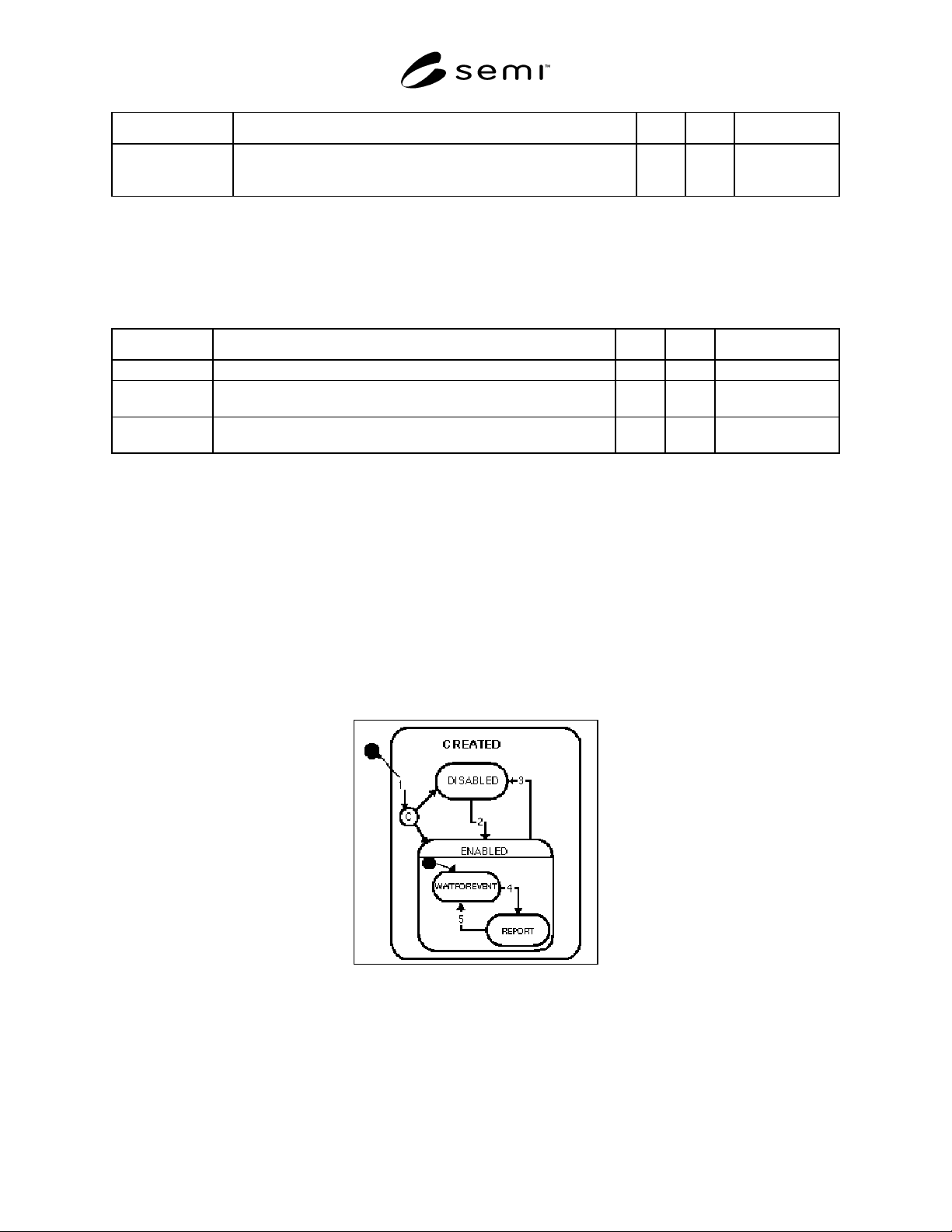
8.1.3 Trace Object — The trace object generates trace reports based on the settings of its attributes. Trace object
activities may be started and stopped by a collection event and may refer to one or more data reports.
Table 3 Trace Object Attribute Definitions
Attribute Name Definition Rqmt Access Form
ObjType Specification of the Object Type. Y RO Text = “TRACE”
ObjID The identifier of a Trace Object. Trace reports contain this parameter
to be used for reference purposes.
Y RO Text
Enabled If this flag is cleared or false, then trace reports will not be generated
and sent.
Y RW Boolean
DataReportList Ordered list of data report object identifiers (text) to be sampled and
sent with trace report.
Y RO List
SamplePeriod The time delay between samples in seconds. Resolution may be in
fractions of a second and should be specified by the service provider.
The resolution available may also vary depending on the Data Source.
Y RO Float
TotalSamples The number of samples to be taken before trace reporting stops
automatically.
N RO Positive Integer
GroupSize The number of samples taken before the report is sent to the service
user.
N RO Positive Integer
StartEventSource The object specifier of the object which is the source of the event
which starts the trace reporting.
N RO Formatted Text
StartEventID The event within the event source object which starts the trace
reporting.
N RO Text
StopEventSource The object specifier of the object which is the source of the event
which stops the trace reporting.
N RO Formatted Text
StopEventID The event within the event source object which stops the trace
reporting.
N RO Text
AutoDelete Specifies if trace report automatically deletes itself when its reporting
cycle is complete.
N RO Boolean
SEMI E53-0704 © SEMI 1996, 2004 11
Attribute Name Definition Rqmt Access Form
ReportChangeOnly If TRUE, then only those data reports linked to the trace report which
have changed since the last sample will be sent with the trace report.
Otherwise, all data reports will be sent with the trace report.
N RO Boolean
8.1.4 Data Source Object — The data source is an entity, accessible to the service provider, which contains data
(attributes) that may be of interest to the service user. The event reporting service can be composed of one or more
data sources. In the case of only one data source, the use of its identifier in messages can be dropped. In this case,
the data source is the default object. The attributes of a data source may be referenced by zero or more data reports.
Table 4 Data Source Object Attribute Definitions
Attribute Name Definition Rqmt Access Form
ObjType The specification of the name for object type of " Data Source.” N RO Text = “DATASRC”
ObjID The identifier of a Data Source Object. (This identifier is used in the
object specifier when defining Data Report.)
N RO Text
AttrList A list of the data source object attribute names. Names from this list
may be used when defining a data report.
Y RO List
8.1.5 Event Source Object — This object represents components within a system that generate collection events.
The service provider supplies mechanisms such that the when collection events are generated by the event source,
then the collection event object, if enabled, will be triggered to generate an event report. ERS does not specify the
attributes or behavior of the event source object. It is included in the event report object model to provide context for
other objects within ERS.
8.2 Object Behaviors — This section specifies the behavior of the three objects in the information model which
have standardized behaviors. The message detail for the service is addressed in a later section. Message flow
diagrams presented in the previous section are useful to show simple situations. The data report, event report and
trace report state models presented in this section provide the information necessary to extrapolate the message flow
diagrams for all situations within the scope of this standard.
8.2.1 Event Reporting State Models — The behavior required for event reporting is fully specified by the service
provider state model. All required service user behavior is inferred by this model.
Figure 10
Collection Event Object State Diagram
8.2.1.1 Figure 10 shows the state diagram for a collection event object. The Harel State Model Notation used is
described in Section 5.