semi合集-English.pdf - 第1908页
SEMI E54.1-1000 © SEMI 1996, 2000 14 7.2.4.2.2 Local Link Object Ser vices — T he re are no common Local Link object services specified. Serv ice s and s ervice parameters may be prov ided by a Local Link obj ect ins ta …
SEMI E54.1-1000 © SEMI 1996, 200013
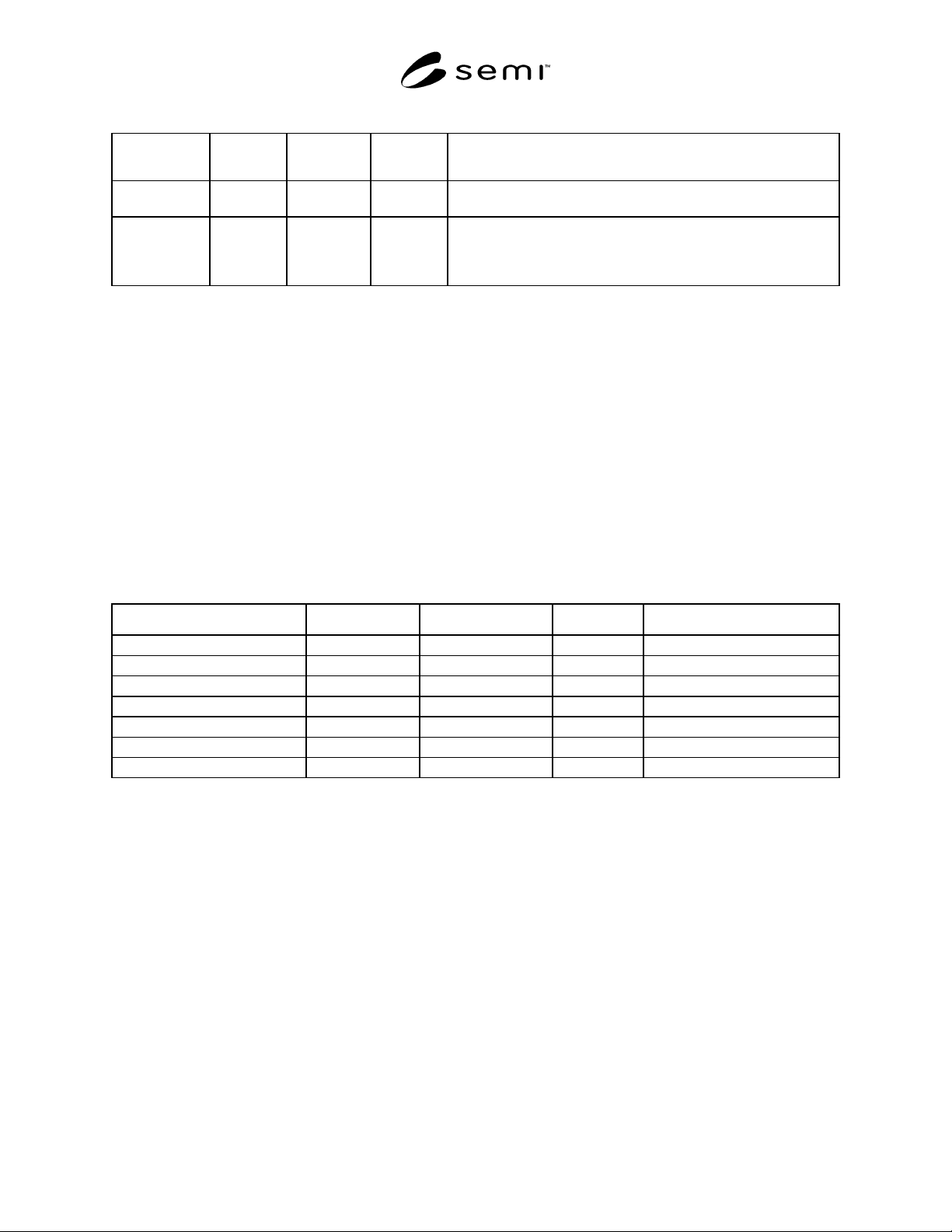
Table 15 Assembly Object Set Attribute Parameter Definition
Parameter Request/
Indication
Response/
Confirmation
Form Description
Attribute ID M C, = Network-
Specific
Attribute Identifier of attribute whose value is to be modified.
Inclusion of Attribute in Rsp/Conf. is optional.
Attribute Value
M
C Context-
Specific
Value to which the attribute is to be modified. Inclusion of Attribute
in Rsp/Conf. is optional. Conditions under which the value may
differ from that supplied in the associated Req/Ind. message (e.g.,
negative response) are not defined in this document.
Additional services and/or service parameters may be provided by an Assembly object instance that are device-
specific and/or implementation-specific. These services may be Notification or Request type services (see Section
6.4.1). A complete definition of additional services and service parameters that are device-specific may be found in
an appropriate sensor/actuator network specific device model specification.
7.2.4.1.3 Assembly Object Behavior — The behavior exhibited by the Assembly object instance is in support of the
GetAttribute and SetAttribute services. That is, when a GetAttribute service request is received for the attribute
“Data”, the response contains the “Data” attribute value. Similarly, when a SetAttribute service request is received
for the attribute “Data”, the value of “Data” is modified, if indeed the attribute is modifiable, and a successful
service response is returned; otherwise, a service not successful is returned.
7.2.4.2 Local Link Object — Local Link object instances may be used to “link” an attribute of one object instance
to an attribute of another object instance.
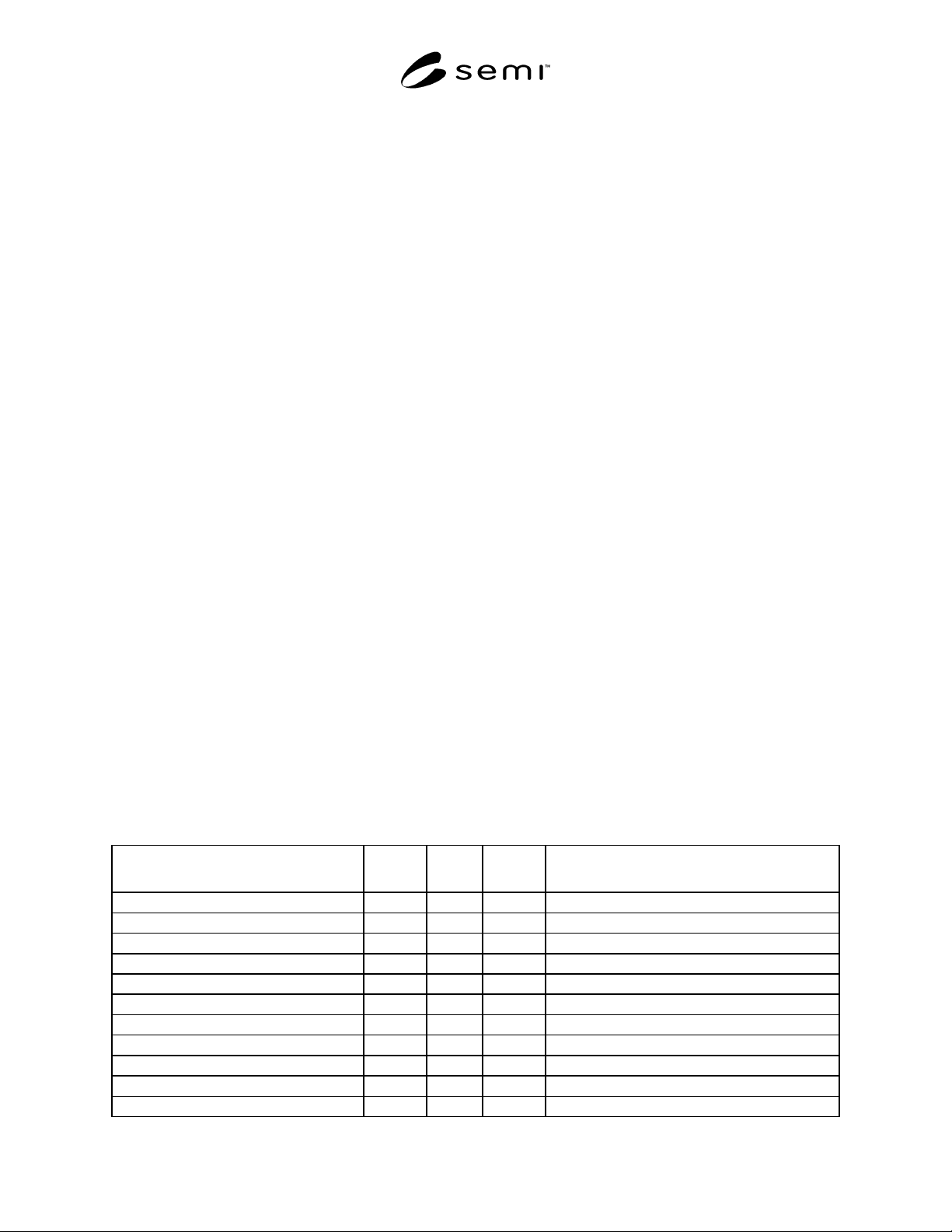
7.2.4.2.1 Local Link Object Attributes — All required and “common optional” Local Link object attributes are
listed in Table 16.
Table 16 Local Link Object Attributes
Attribute Name Attribute Identifier Access Network Required Form
Source Object Class LnkA1 Context-Specific N Context-Specific
Source Object Instance LnkA2 Context-Specific N Context-Specific
Source Object Attribute LnkA3 Context-Specific Y Context-Specific
Destination Object Class LnkA4 Context-Specific N Context-Specific
Destination Object Instance LnkA5 Context-Specific N Context-Specific
Destination Object Attribute LnkA6 Context-Specific Y Context-Specific
Commit LnkA7 Context-Specific N Boolean
7.2.4.2.1.1 Source Object Class — Where applicable, the class of the object instance from which the source
attribute is to be linked.
7.2.4.2.1.2 Source Object Instance — The instance number of the object from which the source attribute is to be
linked.
7.2.4.2.1.3 Source Object Attribute — The attribute ID of the source attribute to be linked.
7.2.4.2.1.4 Destination Object Class — Where applicable, the class of the object instance to which the destination
attribute is to be linked.
7.2.4.2.1.5 Destination Object Instance — The instance number of the object to which the destination attribute is to
be linked.
7.2.4.2.1.6 Destination Object Attribute — The attribute ID of the destination attribute to be linked.
7.2.4.2.1.7 Commit — An attribute that indicates whether the Link object will perform the link function (the link
function is described in Section 7.2.4.2.3). When this attribute is FALSE, the object cannot perform the link
function.
SEMI E54.1-1000 © SEMI 1996, 2000 14
7.2.4.2.2 Local Link Object Services — There are no
common Local Link object services specified. Services
and service parameters may be provided by a Local
Link object instance that are device-specific and/or
implementation-specific. These services may be Notifi-
cation or Request type services (see Section 6.4.1). A
complete definition of additional services and service
parameters that are device-specific may be found in an
appropriate sensor/actuator network specific device
model specification.
7.2.4.2.3 Local Link Object Behavior — Local Link
object instance behavior common to all instances is as
follows. When instantiated, this object performs the
link function. That is, it first uses the GetAttribute
service capability of the source object instance
identified by the Source Object Instance and (possibly)
Source Object Class attributes to retrieve the attribute
value of the attribute identified by the Source Object
Attribute. If the Commit attribute value is TRUE, the
object then uses the SetAttribute service capability of
the destination object instance identified by the
Destination Object Instance and (possibly) Destination
Object Class attributes to set the attribute value of the
attribute identified by Destination Object Attribute to
the (retrieved) value of Source Object Attribute. The
object shall also perform the link function any time the
Commit attribute value transitions to TRUE. The object
shall not write to the destination object instance
whenever the value of the Commit attribute is set to
FALSE. Issues such as frequency of this link update
behavior (while the Commit attribute is set to TRUE, or
when the Commit attribute does not exist), type
matching of Source and Destination attributes, etc., are
beyond the scope of this document.
7.3 Device Manager (DM) Object — The DM object is
the device component responsible for managing and
consolidating the device operation. The DM object
houses information about the device (e.g., serial num-
ber, device type) so that the device may be uniquely
identified remotely via a sensor/actuator network. The
DM object is also responsible for providing details of
the device status. As such, the responsibility of the DM
object includes managing the reporting of exceptions to
normal processing as alarms or warnings. Note that it is
outside the scope of this document to specify the
detailed conditions which initiate alarms and warnings.
Exception handling that is common to all devices on the
network is described here. This behavior and structure
may be extended to handle exceptions which are speci-
fic to certain devices or are proprietary to individual
manufacturers. Extensions for specific devices would
be described in a sensor/actuator network specific
device model for those devices.
A device shall contain exactly one instantiation of a
DM object.
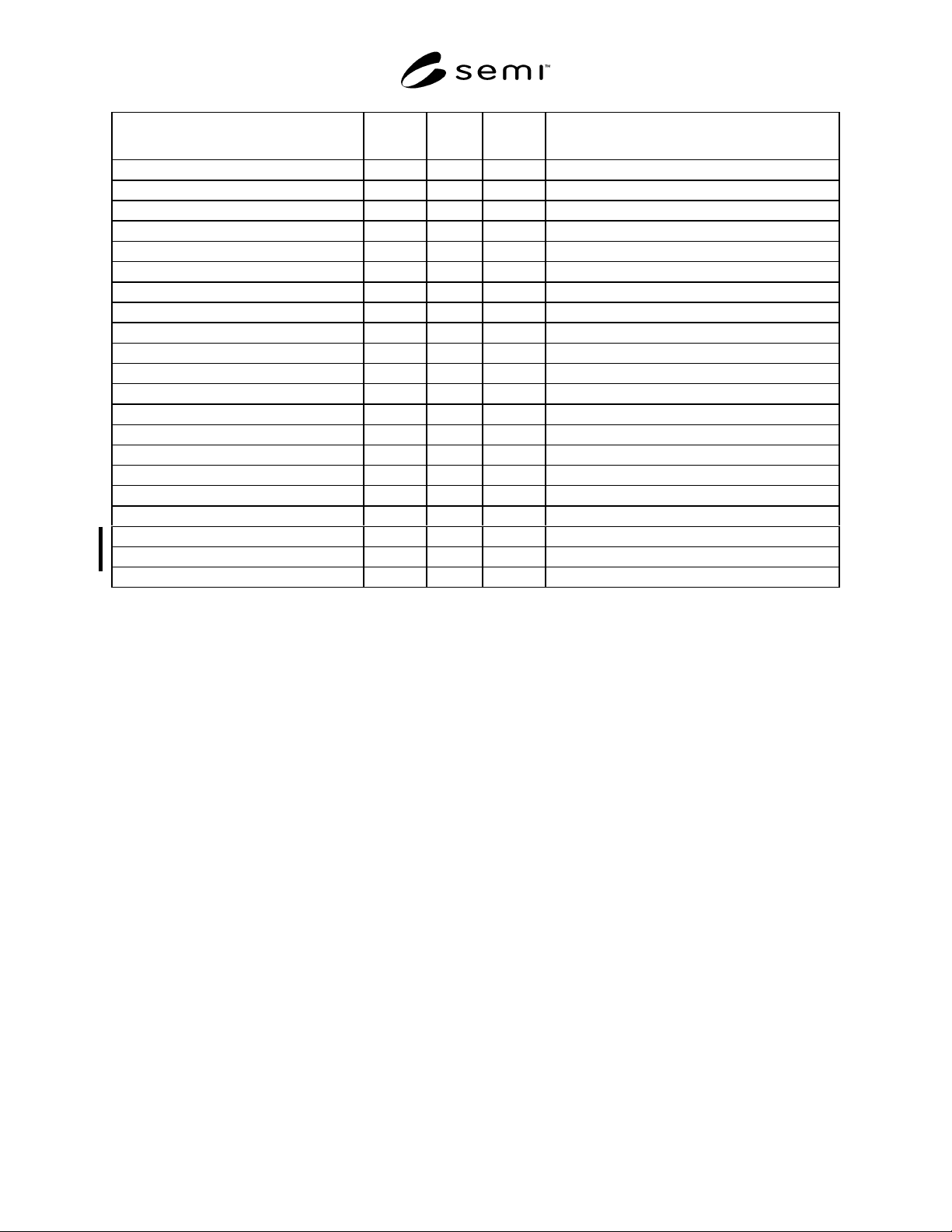
7.3.1 DM Object Attributes — All required and “com-
mon optional” DM object attributes are listed in Table
17. Note that many of the attributes are in text “human-
readable” forms. Information provided in this table
includes, for each attribute: (1) an attribute identifier
tag; (2) an indication of user “write” access (via the net-
work) to the attribute, (i.e., an indication of whether the
attribute is network-settable); and (3) an attribute type
and maximum length. (Note that in many cases it may
be desirable to limit the length of these attributes.)
Required attributes must be supported in all DM object
instantiations. Optional attributes may or may not be
supported; a further specification of the requirement of
support for these optional attributes can be found in
Section 7.3.3 and in an appropriate sensor/actuator net-
work specific device model specification. DM attributes
are identified with an attribute identifier of the form
“DmAn” where “n” is a positive decimal number. DM
attribute identifiers DmA1 through DmA14 are used in
this common device model standard. DM attribute iden-
tifier numbers DmA15 through DmA64 are reserved.
Table 17 Device Manager Instance Attributes*
Attribute Name Attribute
Identifier
Access
Network
Required Form
Device Type DmA1 RO Y Text, 8 characters maximum
Standard Revision Level DmA2 RO Y Text, 10 characters maximum
Device Manufacturer Identifier DmA3 RO Y Text, 20 characters maximum
Manufacturer Model Number DmA4 RO Y Text, 20 characters maximum
Software or Firmware Revision Level DmA5 RO Y Text, 8 characters maximum
Hardware Revision Level DmA6 RO Y Text, 8 characters maximum
Serial Number (optional) DmA7 RO N Text, 30 characters maximum
Device Configuration (optional) DmA8 RO N Text, 50 characters maximum
Device Status DmA9 RO Y unsigned integer, enumerated, see text
Reporting Mode DmA10 RW Y Formatted byte, see text
Exception Status Report Interval (optional) DmA11 RW N unsigned integer, < 65,536
SEMI E54.1-1000 © SEMI 1996, 200015
Attribute Name Attribute
Identifier
Access
Network
Required Form
Exception Status DmA12 RO Y Formatted byte, see text
Exception Detail Alarm (optional) DmA13 — N Structure of
Common Exception Detail — — — Structure of
Size — RO — unsigned integer, < 256
Detail — RO — Ordered list of bytes, see text
Device Exception Detail — — — Structure of
Size — RO — unsigned integer, < 256
Detail — RO — Ordered list of bytes, see text
Manufacturer Exception Detail — — — Structure of
Size — RO — unsigned integer, < 256
Detail — RO — Ordered list of bytes, see text
Exception Detail Warning (Optional) DmA14 *** N Structure of***
Visual Indicator DmA15 RW N Byte, enumerated
Alarm Enable DmA16 RW N Boolean
Warning Enable DmA17 RW N Boolean
Exception Detail Type DmA18 RW N Byte, enumerated
Exception Detail Alarm Queue DmA19 R N Ordered list of type Exception Detail Alarm.
Exception Detail Warning Queue DmA20 R N Ordered list of type Exception Detail Warning.
Date and Time DmA21 RW N See Section 7.3.1.23
Date and Time Type DmA22 RW N Enumerated USINT
Reserved for CDM < DmA32 — — Reserved for future CDM DM attribute definitions.
* A “Definition” column is not included. For attribute definitions, see text.
** A value of 00 indicates that this timer is disabled.
*** Same as Exception Detail Alarm.
7.3.1.1 Device Type — An attribute which identifies the type of the device on the sensor/actuator network. It is
formatted as a text string with a maximum length of 8 characters. The exact content may be defined in an
appropriate sensor/actuator network specific device model specification. For example, “MFC” = mass flow
controller, “CDG” = capacitance diaphragm gauge.
7.3.1.2 Standard Revision Level — An attribute which identifies the most recent version of the sensor/actuator
network specific device model to which the device adheres. It is formatted as a text string with a maximum length of
9 characters as “ENNNNNNYY,” where “E” is a constant defined by SEMI, “NNNNNN” is the number of the
standard, and “YY” is the last two digits of the year in which the standard/revision was published. If there is no
relevant standard or the device is not compliant to the standard, then “NNNNNN” is zero length and “YY” is set to
“00” (thus, the attribute is set to “E00”).
7.3.1.3 Device Manufacturer Identifier — An attribute which designates the manufacturer of the device. Each
manufacturer is responsible for defining this variable for their products in a way which will be unique to that
manufacturer and which must be the same for all devices they provide. Formatted as a text string with a maximum
length of 20 characters, it will usually be the company name, as in “Acme Instrument Co.”
7.3.1.4 Manufacturer Model Number — An attribute which designates the basic model identification number,
defined by the manufacturer. It is formatted as a text string with a maximum length of 20 characters.
7.3.1.5 Device Software or Firmware Revision Level — An attribute which designates the version of
microprocessor code which is contained in the device, defined by the manufacturer. It is formatted as a text string
with a maximum length of 5 characters.
7.3.1.6 Hardware Revision Level — An attribute which designates the version of the device, excluding the
microprocessor code, defined by the manufacturer. It is formatted as a text string with a maximum length of 5
characters.