semi合集-English.pdf - 第2531页
SEMI E88-1104 E © SEMI 1999, 2004 28 Parameter Value Cpname Description Range Format COMMANDINFO L,2 COMMANDID PRIORITY L,2 DEST Destination lo cation identifier. Must be a valid ZoneName. Must be a loading port for a mo…
SEMI E88-1104
E
© SEMI 1999, 2004 27
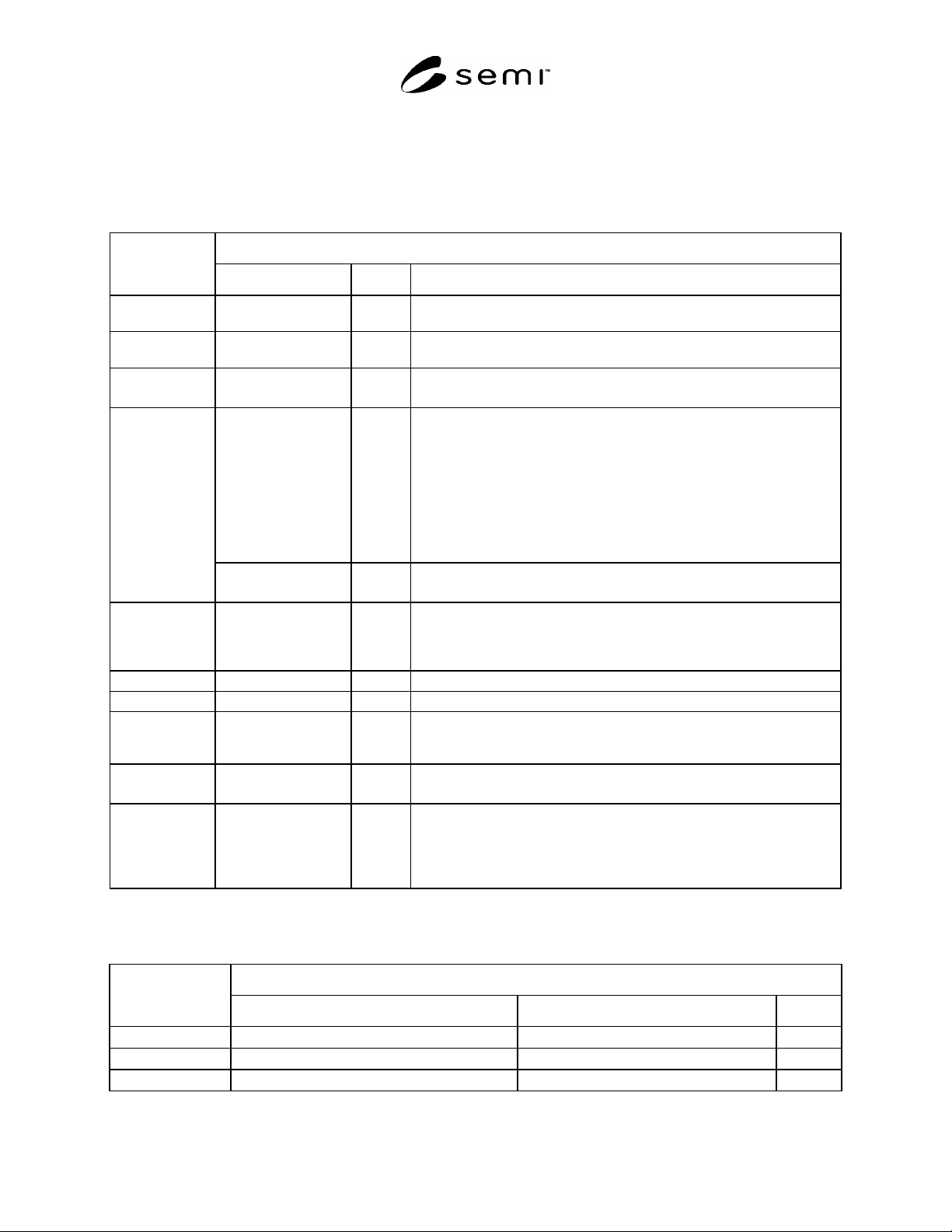
12.3.12 Remote Commands and Associated Host Command Parameters
12.3.12.1 This table describes the allowable command parameters (CPNAME) for each remote command
(RCMD). Equipment shall support all parameters. The column marked Req/Opt, specifies which parameters are
required to be sent by the host and which parameters may be optionally sent by the host.
Table 11 Allowable Command Parameters
Parameters
Remote
Command
Cpname Req/Opt Comment
ABORT “COMMANDID” R Must specify the commandID that was used for the TRANSFER command
that is being ABORT’ed.
CANCEL “COMMANDID” R Must specify the commandID that was used for the TRANSFER command
that is being CANCEL’ed.
INSTALL “CARRIERID”
“CARRIERLOC”
R
R
“CARRIERID”
or
“ZONENAME”
or
“CARRIERLOC”
O
SC will check its database and return the carrier information to the Host
with a single ‘CarrierLocateCompleted’ event for all relevant carriers. If
the Host issues the LOCATE command with CARRIERID then SC returns
information associated with the carrier specified by the Host.
If the Host issues the LOCATE command with ZONENAME or
CARRIERLOC, all carrier information in the specified area (ZONENAME
or CARRIERLOC) will be returned.
If the Host issues the LOCATE command without a Cpname, all carrier
information in the SC database will be returned.
LOCATE
“COMMANDID” O
Unique Command Identifier for the LOCATE command. It does not have
a relationship to the CommandId of a TRANSFER command.
PAUSE None N/A Once received by the SC, the SC will queue any TRANSFER commands
until the SC receives and successfully executes the RESUME command.
Once in the AUTO state the SC will process the TRANSFER commands in
its queue.
REMOVE “CARRIERID” R
RESUME None N/A Returns the PAUSEd SC to the AUTO state.
RETRY
Supplier Option
“ERRORNUMBER” R Since more than one error can occur for the same TRANSFER command,
an ERRORNUMBER must be used to identify the ERRORNUMBER to
which to apply the RETRY.
TRANSFER “COMMANDINFO”
“TRANSFERINFO”
R
R
INFOUPDATE “CARRIERID”
“hostDefined”
R
O
The “HostDefined” cpnames are used to indicate the name of the data that
is to be associated with a carrier. See Section 13 for example scenarios.
The data associated with a carrier is for display purposes only and
information such as the carrier’s current location and state cannot be
changed with this command.
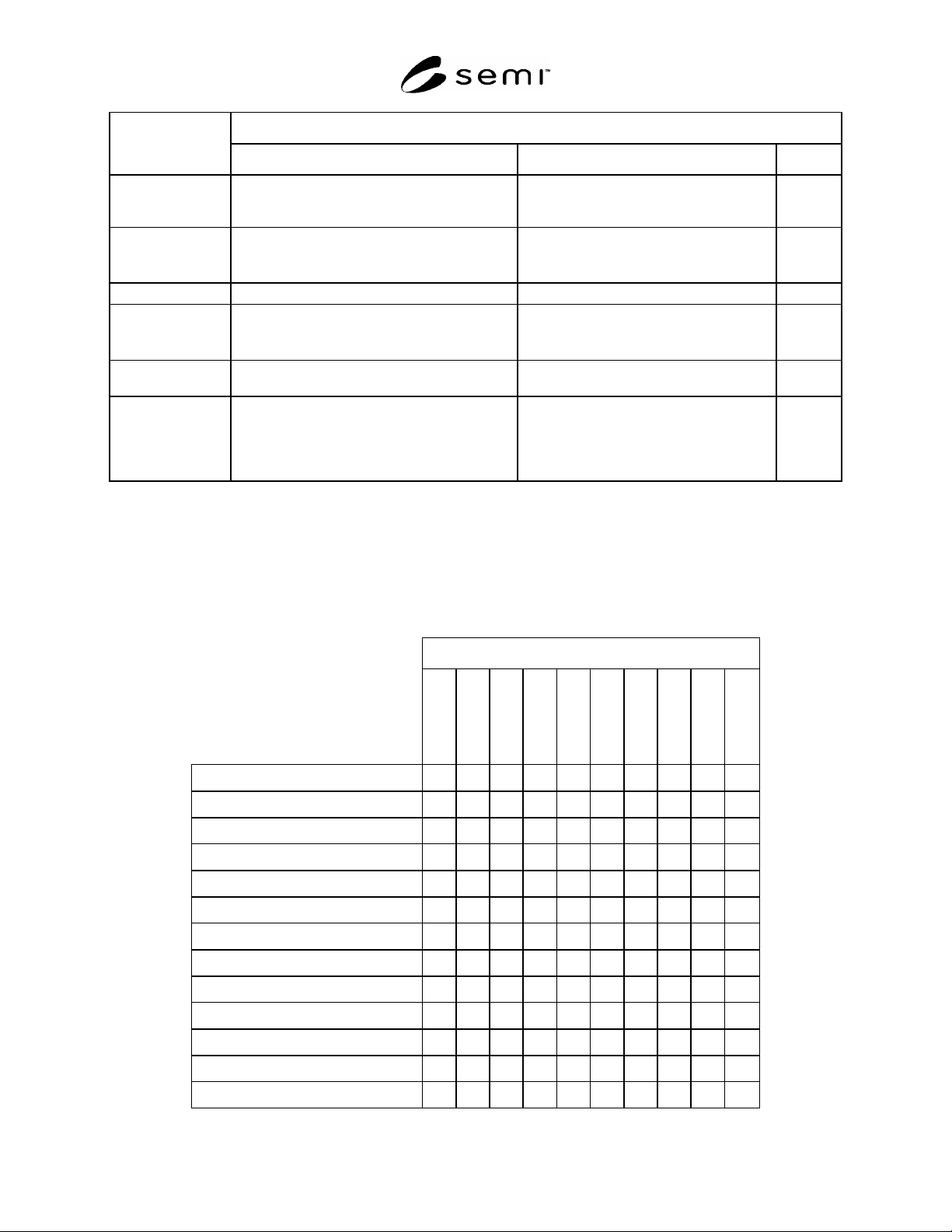
12.3.13 Host Command Parameters Name and Values
Table 12 Host Command Parameters CPNAMES
Parameter Value
Cpname
Description Range Format
CARRIERID Unique ID of the carrier.
A[164]
CARRIERLOC Unique carrier location within the stocker.
A[164]
COMMANDID Unique command identifier created by the Host.
A[164]
SEMI E88-1104
E
© SEMI 1999, 2004 28
Parameter Value
Cpname
Description Range Format
COMMANDINFO L,2
COMMANDID
PRIORITY
L,2
DEST Destination location identifier. Must be a valid ZoneName.
Must be a loading port for a move to an
output shuttle (DEST = LP).
A[164]
ERRORNUMBER Unique error identifier created by the stocker.
A[164]
PRIORITY Remote command priority. 0 is not valid.
1 is the LOWEST priority, 99 is the highest
priority.
U2
SOURCE Unique source location identifier. Stocker Robot/Crane is a valid SOURCE
(Supplier Option).
A[164]
TRANSFERINFO L,3
CARRIERID
SOURCE
DEST
SOURCE may intentionally be left blank by
the Host. If this is true, the stocker must
determine the carrier’s current location by
checking its database for the specified
CARRIERID.
L,3
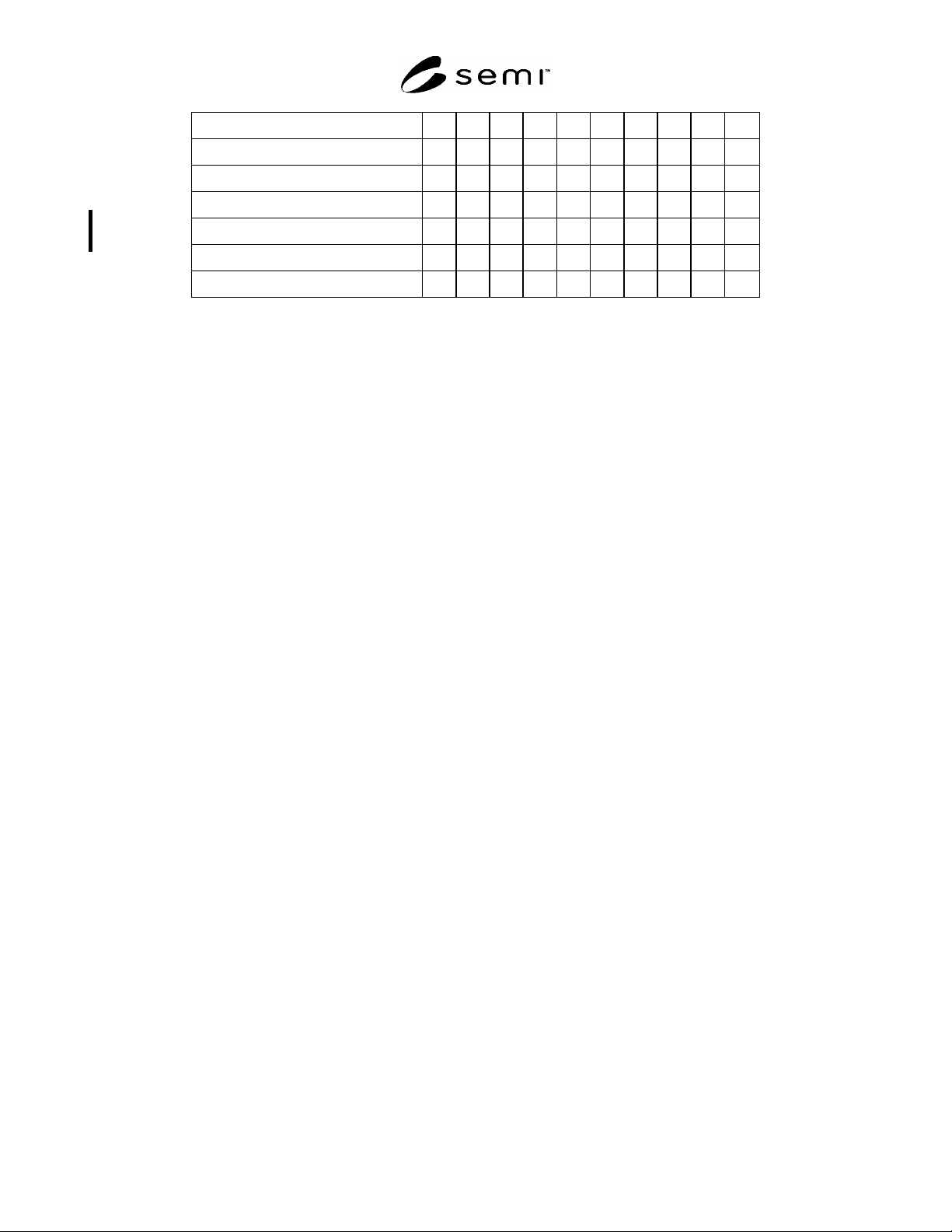
12.3.14 Remote Commands versus SC, Transfer Command and Stocker Carrier States
12.3.14.1 The following table indicates SC, TRANSFER Command and Stocker Carrier States where the remote
commands are allowed. This is indicated with a “X” mark. Remote commands act independently of other state
models (e.g., Stocker Crane States are independent from the Stocker SEM remote commands). “NA” (Not
Applicable) means that States and Remote Commands have no direct relationship.
Table 13 Remote Commands versus SC and TRANSFER Command States
COMMAND
TRANSFER
RETRY
RESUME
REMOVE
PAUSE
LOCATE
INSTALL
CANCEL
ABORT
INFOUPDATE
SC STATE
AUTO X X X X X X X X X
ALARMS X X X X X X X X X X
SC INIT
NO ALARMS X X X X X X X X X
PAUSED X X X X X X X X X
PAUSING X X X X X X X X X
TRANSFER COMMAND STATE
ACTIVE (PAUSED) NA X NA NA X X NA
ACTIVE (QUEUED AT ALT.) NA NA NA X X NA
ACTIVE (TRANSFERRING) NA NA NA X X NA
ABORTING NA NA NA X NA
CANCELING NA NA NA X NA
SEMI E88-1104
E
© SEMI 1999, 2004 29
QUEUED NA NA NA X X NA
STOCKER CARRIER STATE
STORED (ALTERNATE) NA NA NA X NA X X
STORED (COMPLETED) X NA NA X NA X X NA X
TRANSFERRING X NA NA NA X NA NA X
WAIT IN X NA NA X NA X X NA NA X
WAIT OUT NA NA X NA X X NA NA X
12.4 Remote Command Relies
12.4.1 For a TRANSFER remote command the HCACK in the reply message must return an error 6 (No such
Object Exists) if the SOURCE is not specified and the CARRIERID is not in the SC database. If the SOURCE is
invalid (i.e. not a valid CarrierLoc), then the HCACK in the reply message must return an error of 3 (Invalid
Parameter).
12.4.2 For a LOCATE remote command the HCACK in the reply message must return an error 6 (No such Object
Exists) if value specified for the CARRIERID, ZONENAME, or CARRIERLOC does not exist in the SC database.
13 Scenarios
13.1 The scenarios that follow represent Application Notes. In the scenarios, all unique Remote CommandIDs must
initially be created and sent by the Host. Subsequent event reports sent from the equipment referring to the status of
a particular remote command must return the applicable CommandID. All collection events identified in Table 6 are
assumed to be enabled (per the SEMI E30 definition/scenario) throughout the following scenarios. Variable data
specified in the Host commands has been chosen arbitrarily for the purpose of demonstrating message
structure/content. The Collection Event Report definitions contained in the scenarios are examples that could be
defined by the host.