semi合集-English.pdf - 第6847页
SEMI S2-0703a E © SEMI 1991, 2004 76 RELATED INFORMATION 13 SURFACE TEMPERATUR E DOCUMENTATION NOTICE : This rel ated information i s not an of ficial part of SEMI S2 and was de rived from practical application by task f…
SEMI S2-0703a
E
© SEMI 1991, 2004 75
RELATED INFORMATION 12
LIGHT TOWER COLOR AND AUDIBLE ALERT CODES
NOTICE: This related information is not an official part of SEMI S2 and was derived from practical application by
task force members. This related information was approved for publication by vote of the responsible committee on
October 21, 1999.
R12-1 Colors for Light Towers
R12-1.1 Where used for safety, a light tower should have the following characteristics:
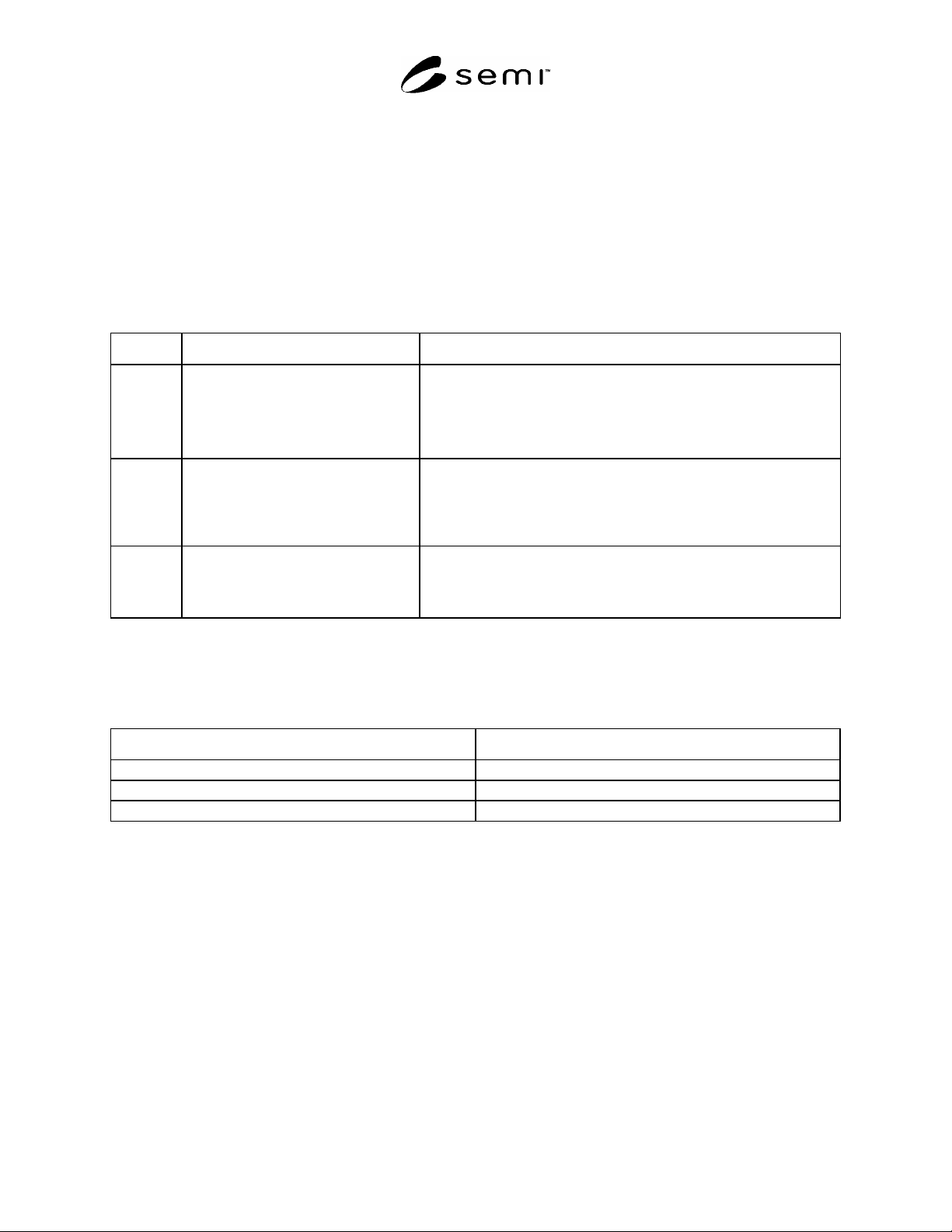
Table R12-1 Light Tower Color Code
Color Explanation Examples
Red Hazardous, dangerous or abnormal
condition requiring immediate
attention
Pressure/temperature out of safe limits;
Voltage drop; Breakdown
Overtravel of a stop position
Indication that a protective device has stopped the machine, e.g.,
overload
Yellow Abnormal, caution/marginal condition;
Change or impending change of
critical condition requiring monitoring
and/or intervention (e.g., by re-
establishing the intended function)
Pressure/temperature exceeding normal limits
Tripping of protective device Automatic cycle or motors running; some
value (pressure, temperature) is approaching its permissible limit.
Ground fault indication. Overload that is permitted for a limited time.
Green Normal condition; machine ready Pressure/temperature within normal limits
Indication of safe condition or authorization to proceed. Machine ready
for operation with all conditions normal or cycle complete and machine
ready to be restarted.
R12-2 Audible Alert (Buzzer) Code
R12-2.1 Where used for safety, audible alert (buzzer) for the light tower should have the following characteristics:
Table R12-2 Light Tower Buzzer Code
Color Audible Alert (Buzzer)
Red Continuous
Yellow Intermittent
Green Intermittent/no sound (selectable)

SEMI S2-0703a
E
© SEMI 1991, 2004 76
RELATED INFORMATION 13
SURFACE TEMPERATURE DOCUMENTATION
NOTICE: This related information is not an official part of SEMI S2 and was derived from practical application by
task force members. This related information was approved for publication by vote of the responsible committee on
October 21, 1999.
The following is some of the research leading to the
values in Table 1 in Section 18 of this guideline.
R13-1 The proposed Hazardous Temperature Limits
were derived from UL1950
12
and IEC950
13
by adding
ambient temperature (25°C) to the maximum
temperature rise allowed for external parts of
information technology equipment. Because several
SEMI members have questioned whether these limits
might subject operators and maintenance personnel to
contact with potentially hazardous temperatures, a
review has been done of several other sources of
suggested temperature limits.
R13-2 The proposed hazardous surface temperatures
for handling and touching of metal handles, knobs, etc.,
for brief periods in normal use is 60°C. Assuming a
brief handling time to be 5 seconds or less, this limit is
supported in MIL-STD-1472
14
, MIL-HDBK-759A
15
and EN563
16
(which are the same or more conservative
by 2°C), and is equal to the pain and tissue damage
threshold listed in the Human Factors Design
Handbook
17
. Thus, this temperature limit seems
appropriate for momentary (five seconds or less)
contact with uncoated metal handles, knobs, etc., and
other material with high thermal conductivity.
R13-3 The proposed hazardous surface temperatures
for handling and touching of glass/porcelain handles,
knobs, etc., for brief periods in normal use is 70°C.
This temperature limit is supported by MIL-STD-1472
and EN563. MIL-HDBK-759 is not applicable because
it must be assumed that it applies only to material with
high thermal conductivity.
R13-4 The proposed hazardous surface temperatures for
handling and touching of plastic/rubber handles, knobs,
etc., for brief periods in normal use is 85°C. This
12 UL 1950, Safety of Information Technology Equipment, 1989
(Underwriters Laboratory Standard).
13 IEC 950, Safety of Information Technology Equipment, 1986
(International Electrotechnical Commission Standard).
14 MIL-STD-1472D, Human Engineering Design Criteria for
Military Systems, Equipment & Facilities (Military Standard).
15 MIL-HDBK-759A, Handbook for Human Engineering Design
Guidelines, 1981 (Military Handbook).
16 EN 563, Safety of Machinery – Temperatures of Touchable
Surfaces, 1994 (European Normative Standard).
17 Human Factors Design Handbook, Second Edition, Woodson,
Tillman & Tillman, 1992 (Reference).
temperature limit is similarly supported by MIL-STD-
1472 and EN563. MIL-HDBK-759 is not applicable.
R13-5 The proposed hazardous surface temperatures
for continuous handling and touching of metal handles,
knobs, etc., during normal usage is 55°C. It is
suggested, based on observations of semiconductor
equipment in use, that a continuous handling time of
one minute be used. With this duration, the limit of the
MIL-STD and the MIL-HDBK ranges from 49 to 52°C.
The EN563 burn threshold limit for contact with metal
for one minute is 51°C. The burning heat pain level
listed in the Human Factors Design Handbook is 49°C
(no time frame given; assume high thermal conductivity
material). Thus, the proposed temperature limit appears
to be somewhat high for reasonably foreseeable
extended handling contact with uncoated metal handles,
knobs, etc., and other material with high thermal
conductivity. The Section 18 Table 1 limit is 51°C,
which might be somewhat painful to more sensitive
personnel, but should not result in tissue damage.
R13-6 The proposed hazardous surface temperatures
for extended handling and touching of glass/porcelain
handles, knobs, etc., during normal usage (again
assuming 1 minute) is 65°C. The limit of MIL-STD-
1472D is 59°C for “prolonged contact” with glass. The
EN563 burn threshold limit at 1 minute is 56°C. Thus,
the proposed temperature limit appears to be slightly
high for reasonably foreseeable extended handling
contact with glass/porcelain surfaces of moderate
thermal conductivity. The Section 18 Table 1 limit is
56°C, which is the more conservative of the
recommendations. This limit could be raised based
upon the results of the risk assessment for actual and
foreseeable normal usage.
R13-7 Similarly, the proposed hazardous surface
temperatures for extended handling and touching of
plastic/rubber handles, knobs, etc., during normal usage
(again assuming 1 minute) is 75°C. The limit of MIL-
STD-1472D is 69°C for “prolonged contact” with
plastic. The EN563 burn threshold limit at 1 minute is
60°C. Thus, the proposed temperature limit again
appears to be slightly high for reasonably foreseeable
extended handling contact with plastic/rubber surfaces
of low thermal conductivity. The Section 18 Table 1
limit is 60°C, which is the more conservative of the
recommendations. This limit could be raised based
SEMI S2-0703a
E
© SEMI 1991, 2004 77
upon the results of the risk assessment for actual and
foreseeable normal usage.
R13-8 The proposed hazardous surface temperatures
for external surfaces and internal parts which may be
touched are 70°C for metal, 80°C for glass/porcelain,
and 95°C for plastic/rubber. It is assumed that this limit
applies to inadvertent touching by the
operator/maintenance person, resulting in the person
instantly breaking contact with the hot surface. There
are no analogs in either the MIL-STD or the MIL-
HDBK for these temperature limits. The EN563 burn
threshold range for one-second contact with uncoated
metal is 65 to 70°C, while the range for one-second
contact with glass is 80 to 86°C. The proposed
temperature limit appears to be slightly high for
reasonably foreseeable inadvertent contact with
external metal surfaces. The Section 18 Table 1 limit
for contact with external metal surfaces is 65°C, which
is the conservative end of the EN563 range.
R13-9 No information was available to support or
refute the temperature limits for contact with external
plastic/rubber surfaces. With regard to internal parts,
the proposed temperature limits may be adequate given
the foreseeable cooling which would likely occur prior
to handling of internal parts. The actual thermal lag of
components likely to be handled could be verified by
thermocouple readings on specific equipment during a
risk assessment.
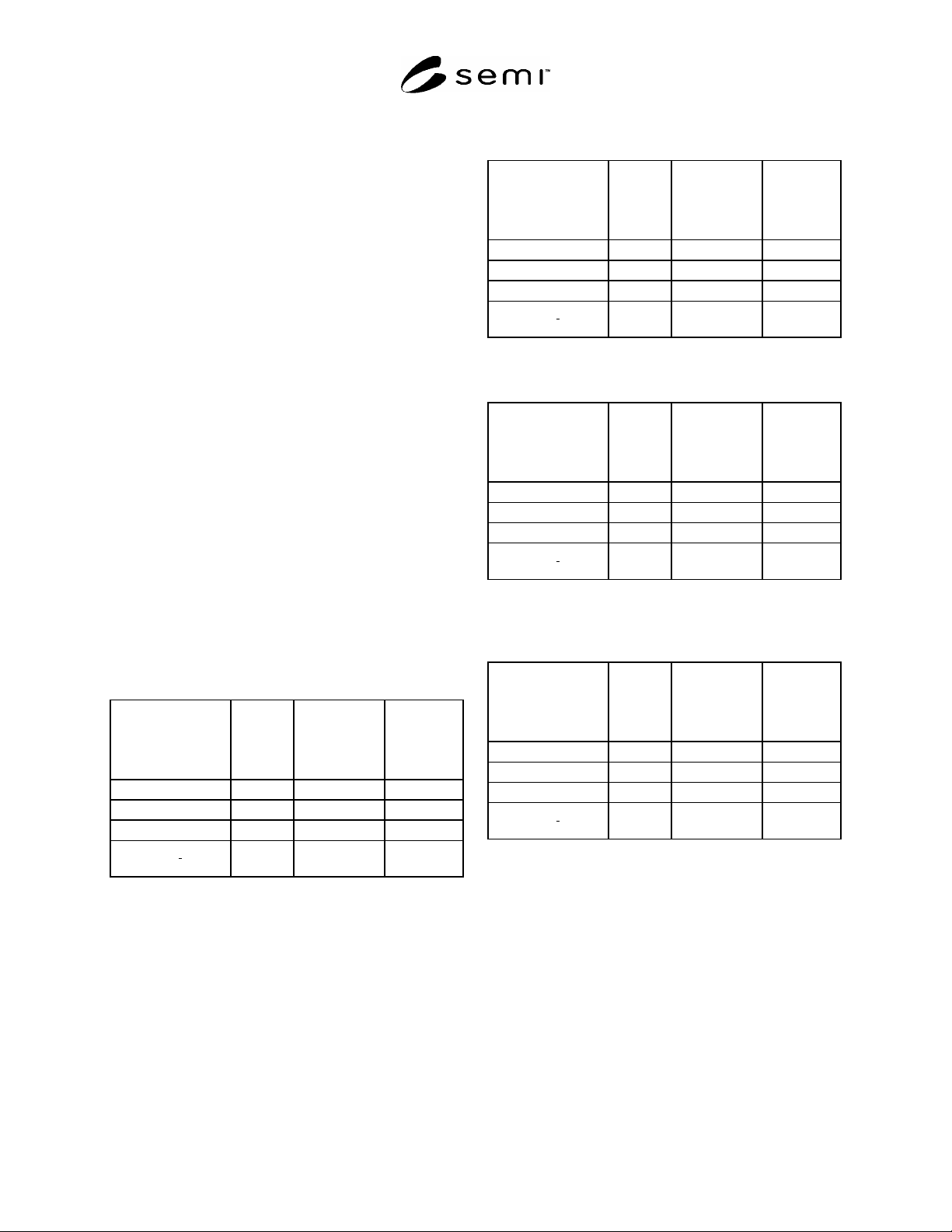
Table R13-1 Allowable Surface Temperatures (°C)
for Handles, Knobs, Grips, etc., Held for Short
Periods Only (5 seconds or less)
Metal Glass,
Porcelain,
Vitreous
Material
Plastic,
Rubber
EN563 58 70 n/a
MIL-STD-1472 60 68 85
MIL-HDBK-759 60 n/a n/a
Section 18 Table
1 Value
60 70 85
Table R13-2 Allowable Surface Temperatures (°C)
for Handles, Knobs, Grips, etc., Held in Normal Use
Metal Glass,
Porcelain,
Vitreous
Material
Plastic,
Rubber
EN563 51 56 60
MIL-STD-1472 49 59 69
MIL-HDBK-759 52 n/a n/a
Section 18 Table
1 Value
51 56 60
Table R13-3 Allowable Surface Temperatures (°C)
for External Surface of Equipment Which May Be
Momentarily Touched
Metal Glass,
Porcelain,
Vitreous
Material
Plastic,
Rubber
EN563 65-70 80-86 n/a
MIL-STD-1472 n/a n/a n/a
MIL-HDBK-759 n/a n/a n/a
Section 18 Table
1 Value
65 80 95
Table R13-4 Allowable Surface Temperatures (°C)
for Parts, Inside the Equipment, Which May Be
Momentarily Touched
Metal Glass,
Porcelain,
Vitreous
Material
Plastic,
Rubber
EN563 n/a 68 85
MIL-STD-1472 n/a n/a n/a
MIL-HDBK-759 n/a n/a n/a
Section 18 Table
1 Value
65 80 95