semi合集-English.pdf - 第3685页
SEMI PR8-0703 © SEMI 2003 15 Table 17 Equipment ID XML definition Tag Name Description XML Datatype Behavior EquipmentID Complex element that contains all the equipm ent identifier fields Complex Required Supplier Suppli…
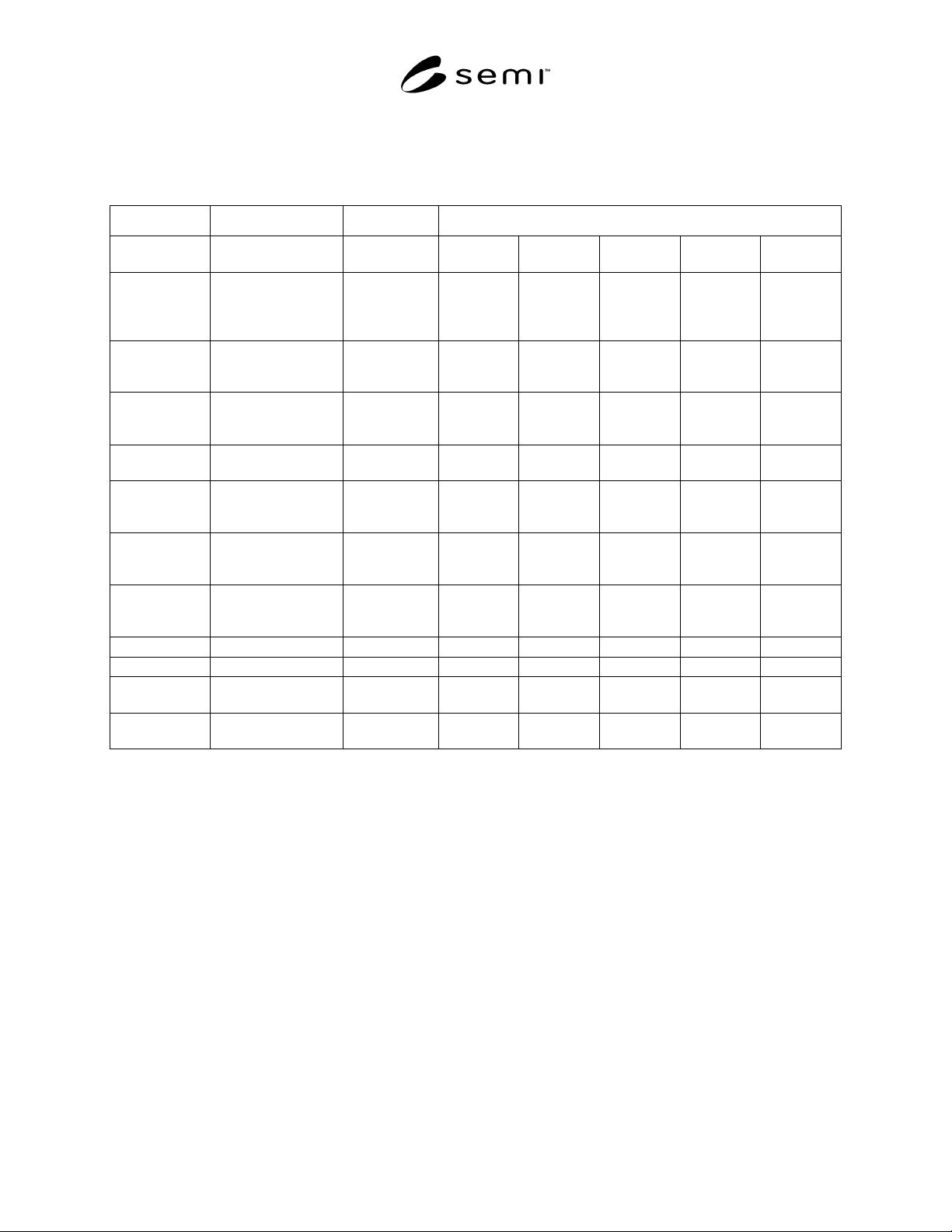
SEMI PR8-0703 © SEMI 2003 14
7.6.2.7.3 XML Definition of Data Management Responses — Responses to data management requests are
embedded in the HTTP response to the data management request. The response will contain only the operation type
element as defined below.
Table 16 XML Data Management Response Definition
Tag Name Description XML Datatype Behavior
IsEda-
Enabled
GetDefined-
PlanIds
GetActive-
PlanIds
ActivatePlan Deactivate-
Plan
See columns 4-8
in this row for
tag names,
shown in quotes
Operation Name
Element
Complex
Required-
“IsEda-
Enabled
Response”
Required-
“GetDefined
PlanIds
Response”
Required-
“GetActive-
PlanIds
Response”
Required-
“Activate-
Plan
Response”
Required-
“Deactivate-
Plan
Response”
DefinedPlanIds Space delimited array
of defined data
collection plan names
List N/A Required N/A N/A N/A
ActivePlanIds Space delimited array
of Active data
collection plan names
List N/A N/A Required N/A N/A
IsEnabled Whether or not the
EDA port is enabled
Boolean Required N/A N/A N/A N/A
IsActivated Whether or not the
equipment activated
the requested plan
Boolean N/A N/A N/A Required N/A
Deactivated-
PlanIds
Data collection plan
ids de-activated by
this operation
List N/A N/A N/A N/A Required
Error Include if data
management request
could not be executed
Complex Optional Optional Optional Optional Optional
ErrorTime Time of the error DateTime Optional Optional Optional Optional Optional
ErrorType Category of error String Optional Optional Optional Optional Optional
ErrorCode Unique identifier of
error
String Optional Optional Optional Optional Optional
ErrorDesc Text description of
error
String Optional Optional Optional Optional Optional
7.7 XML Message Formats
7.7.1 This section describes the XML fragments that
make up the body of the SOAP messages that will be
sent by equipment to EDA clients through the EDA
port. The section describes the general construction of
the SOAP body and the structure of the elements that
make up the SOAP body. Each EDA client must
implement all of the messages defined in this section.
7.7.2 General Construction — Each SOAP body will
have the following structure: The root element is the
Operation Name element, and is named after the
operation being performed. The first element inside the
root element will be the Equipment ID element. The
Equipment ID element is followed by one or more
Operation Name elements. Each Operation Name
element in a data acquisition message may contain 0 or
more Param elements.
7.7.3 Equipment ID
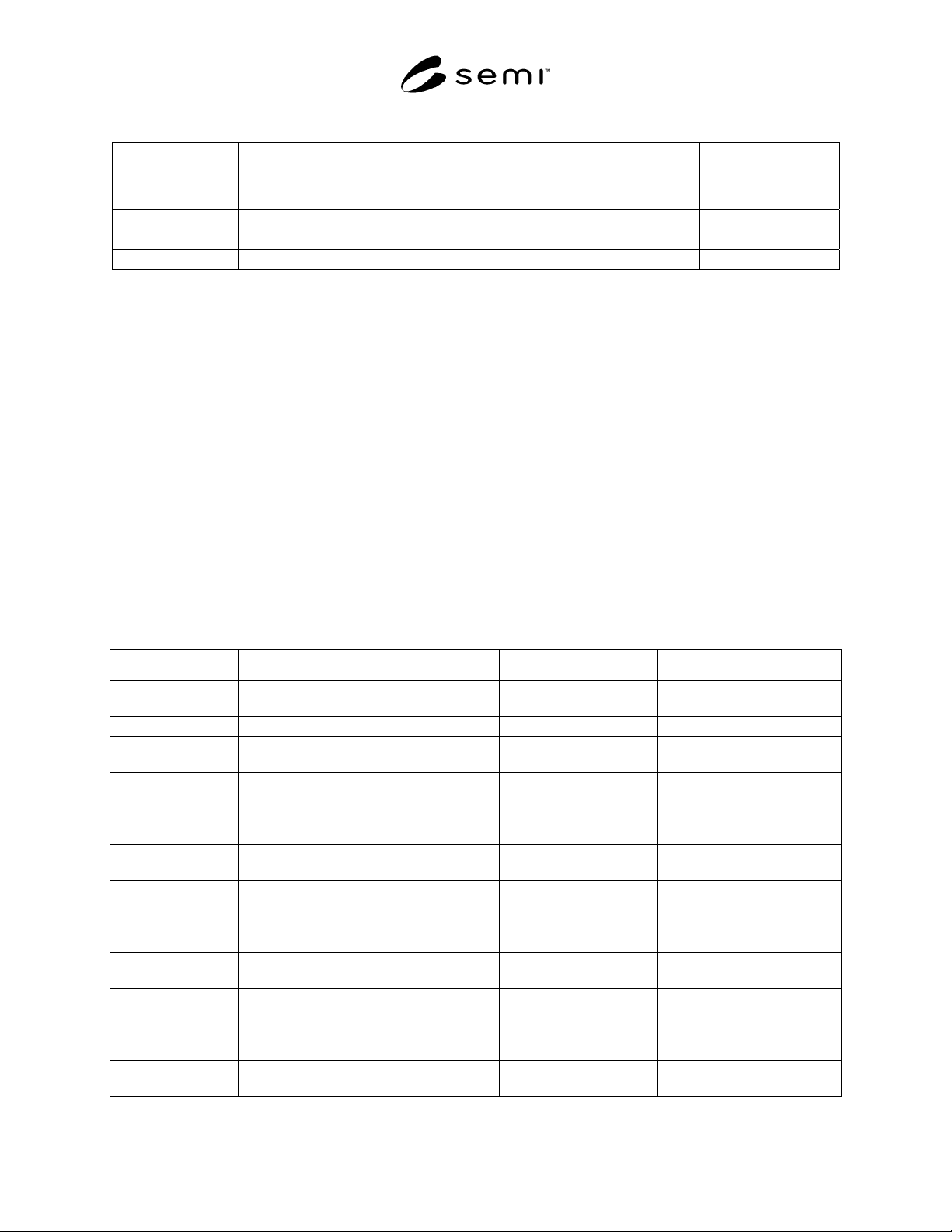
7.7.3.1 Each message has one and only one
EquipmentID element. The EquipmentID element
identifies the equipment for which all data in the
message apply.
SEMI PR8-0703 © SEMI 2003 15
Table 17 Equipment ID XML definition
Tag Name Description XML Datatype Behavior
EquipmentID Complex element that contains all the equipment
identifier fields
Complex Required
Supplier Supplier Name String Required
Model Equipment Model String Required
ImmutableID Serial number or Immutable ID of the specific tool String Required
7.7.3.2 General Structure Example
<EdaData>
<EquipmentID>
<Supplier>Some Supplier</Supplier>
<Model>8400</Model>
<ImmutableID >998948</ImmutableID >
</EquipmentID>
<Event>
……..
…….
</Event>
<ExEvent>
……..
</ExEvent>
</EdaData>
7.7.4 Param Element
7.7.4.1 There may be zero or more Param elements
inside any Operation Name element. Param elements
can describe measured values or descriptive attributes.
Any tag names not explicitly defined in this proposed
standard must be communicated through param
elements. All param elements that may be
communicated through the EDA interface must be
defined in the Metadata files.
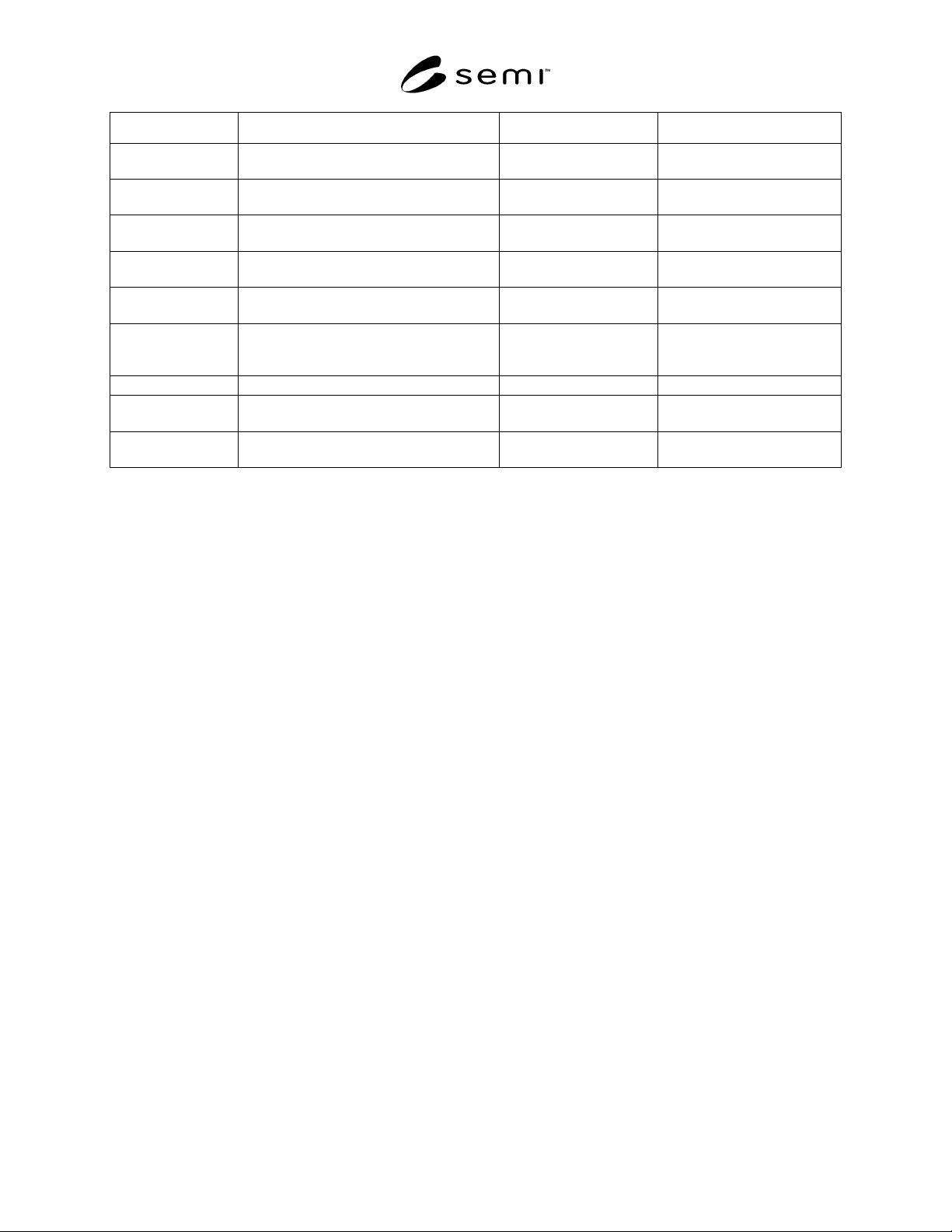
7.7.4.2 All param elements must contain the Name and
Value elements, at a minimum. Other, optional
elements are listed in the table below. The equipment
supplier may define additional optional elements. The
elements to be included in the communication of
specific Names must be defined in the Metadata files.
The units and the data type of specific Names must be
defined in the Metadata files.
Table 18 Param Element Definition
Tag Name Description XML Datatype Behavior
Param Complex element containing all fields
pertaining to a single parameter.
Complex Required
Name The name of the parameter. String Required
Value The value of the parameter. See below for
more definition.
Complex Required
IntVal An integer value Integer Optional;
maxOccurrances=unbounded
IntArrayVal An array of integers List; itemType=integer Optional;
maxOccurrances=unbounded
FloatVal A float value Float Optional;
maxOccurrances=unbounded
FloatArrayVal An array of Float values List; itermType=Float Optional;
maxOccurrances=unbounded
DoubleVal A double value Double Optional;
maxOccurrances=unbounded
DoubleArrayVal An array of double values List; itemType=double Optional;
maxOccurrances=unbounded
StringVal A string String Optional;
maxOccurrances=unbounded
StringArrayVal An array of strings List: itemType=string Optional;
maxOccurrances=unbounded
DateTimeVal A dateTime DateTime Optional;
maxOccurrances=unbounded
SEMI PR8-0703 © SEMI 2003 16
Tag Name Description XML Datatype Behavior
DateTimeArrayVal An array of dateTimes List: itermType=dateTime Optional;
maxOccurrances=unbounded
Base64BinaryVal A base64 values Base64Binary Optional;
maxOccurrances=unbounded
AnyURIVal A URI AnyURI Optional;
maxOccurrances=unbounded
BoolVal A Boolean value Boolean Optional;
maxOccurrances=unbounded
BoolArrayVal An array of Boolean values List: itemType=boolean Optional;
maxOccurrances=unbounded
StructVal Container for groups of simple types. May
contain an unlimited number of the simple
types defined for value.
Complex Optional;
maxOccurrances=unbounded
MeasTime Time of the measurement, if applicable. dateTime Optional
Locator Unique identifier for the tool entity, or
namable, to which the param applies.
String Required
Extension Element containing any additional fields
provided by the supplier.
Any Optional
7.7.4.3 Value Elements — The elements within the Value element may contain a single scalar value, a space
delimited array, or a StructVal element. StructVal elements may not be nested.
Example 1: simple parametric data point named pressure
<Param>
<Name>Pressure</Name>
<Value>
<FloatVal>43.56</FloatVal>
</Value>
<MeasTime>1999-05-31T13:20:00.087-05:00</MeasTime
</Param>
Example 2: Collection event ID
<Param>
<Name>CEID</Name>
<Value>
<IntVal>1278</ IntVal >
<StructVal>
<DateTimeVal>…….</DateTimeVal>
<FloatVal>………</FloatVal>
</StructVal>
</Value>
</Param>
7.7.5 DateTime XML Datatype — Whenever an element is given the dateTime XML DataType in this specification
it shall conform to the dateTime built-in data type defined in XML Schema Part 2-Datatypes. The dateTime
representation shall include the difference from UTC and the fractional seconds precision shall be at least .01
seconds (i.e., ss.ss). Equipment shall pad the fractional seconds field with zeros beyond its measurable precision.
7.7.6 Eda Client Operations — This specification defines three different notifications that EDA clients must
support: EdaEnabled, EdaDisabled, and EdaData. The EdaData notification includes both Event and Exception
data. Extensions to the Event data for the EdaData message are described in related information. The SOAPAction