semi合集-English.pdf - 第6617页
ACETIC A CID SEMI C18-0301 © SEMI 1978, 20 01 3 sample by effervescence or sp attering until there is no furth er loss of liqui d. Cool. A dd 1 mL of ultra pure, 70% nitric acid. While maintaining volume, carefully warm …

SEMI C18-0301 © SEMI 1978, 2001 ACETIC ACID2
8.6 Phosphate — Evaporate 9.5 mL (10 g) of sample
to dryness on a steam bath in a hood. Dissolve the
residue, warming if necessary, in 25 mL of 0.5 N
sulfuric acid. Add 1 mL of ammonium molybdate
reagent solution and 1 mL of p-(methylamino)phenol
sulfate reagent solution. Allow to stand at room
temperature for 2 hours. Any blue color should be no
greater than that produced when 0.01 mg of phosphate
ion (PO
4
) is treated as the sample.
8.7 Substances Reducing Dichromate — To 10 mL
(10.5 g) of sample, add 1.0 mL of 0.1 N (0.017 M)
potassium dichromate solution and cautiously add 10
mL of sulfuric acid. Cool the solution to room
temperature and allow to stand for 30 minutes. Add 50
mL of water slowly and cautiously with continual
swirling, allow to cool, and then add 1 mL of freshly
prepared potassium iodide reagent solution. Titrate the
liberated iodine with 0.1 N (0.1 M) thiosulfate solution
using starch as the indicator. Compare the volume of
thiosulfate solution required with that for a 10 mL
water blank prepared in parallel with the sample. The
difference between the titrations for sample and blank
should be no greater than 0.40 mL.
8.8 Substances Reducing Permanganate — Dilute 40
mL (42 g) of sample with 10 mL of water. Cool to
15°C, add 0.30 mL of 0.1 N (0.02 M) potassium
permanganate, and allow to stand at 15°C for 10
minutes. The pink color should not be entirely
discharged.
8.9 Sulfate — To 95 mL (100 g) of sample, add 10 mL
of sodium carbonate reagent solution and evaporate to
dryness in a hood. Dissolve the residue in 10 mL of
water and 1 mL of dilute hydrochloric acid (1 + 19);
filter if necessary. Add 1 mL of barium chloride reagent
solution, mix and allow to stand for 10 minutes. Any
turbidity developed should be no greater than that
produced when 0.05 mg of sulfate ion (SO
4
) is treated
as the sample.
8.10 Arsenic and Antimony (as As) — To 190 mL (200
g) of sample in a 400 mL beaker, add 5 mL of nitric
acid and 5 mL of sulfuric acid and evaporate to dense
fumes of sulfur trioxide in a hood. Cool, cautiously add
10 mL of water, and again evaporate to dense fumes of
sulfur trioxide. Cool and cautiously wash into a
generator flask with water to make a volume of 35 mL.
Proceed as described in the General Method for Arsenic
(and Antimony) under SEMI C1, Section 3.4.5, starting
with the sentence which begins: “Swirl the flask....”
Any red color in the silver diethyldithiocarbamate
solution of the sample should be no greater than that of
the standard containing 0.001 mg of arsenic (As).
8.11 Acetic Anhydride — Place 52.2 g (50 mL) of
sample in a 250 mL titration flask. In a second flask
place 50 mL of glacial acetic acid known to be free
from acetic anhydride (see NOTE 3). Into each flask
pipet 10 mL of 1.0% solution of 4, 4' -
methylenedianiline (4, 4' -diaminodiphenylmethane) in
glacial acetic acid (see NOTE 4) and add 0.10 mL of
1.0% solution of crystal violet in glacial acetic acid.
Titrate each solution with a 0.1 N solution of perchloric
acid in glacial acetic acid (see NOTE 5) to a green
endpoint. Subtract the volume for the titration of the
sample from the volume for the other titration. One mL
of 0.1 N perchloric acid corresponds to 0.0194%
(CH
3
CO)
2
O for a 50 mL sample.
NOTE 4: Glacial acetic acid suspected of containing
anhydride may be purified by adding 0.50 mL of water per
100 mL and digesting overnight in a glass-stoppered flask on
the steam bath. If this acid is used for comparison in the
above test, 0.25 mL of water should be added to the flask
containing the test sample just before the endpoint, because
water affects the indicator change slightly.
NOTE 5: Dissolve 2.50 g of 4, 4' -methylenedianiline
(colorless or only slightly colored) in glacial acetic acid to
make 250 mL. Protect the solution from light.
NOTE 6: Slowly add 4.5 mL of 70% perchloric acid to about
400 mL of glacial acetic acid and dilute with glacial acetic
acid to 500 mL. Standardize against potassium hydrogen
phthalate in glacial acetic acid solution using crystal violet as
indicator.
8.12 Trace Metal Analysis — The following method
has given satisfactory results in determining trace metal
impurities at the value specified for each of the
following trace metals: aluminum (Al), boron (B),
calcium (Ca), chromium (Cr), copper (Cu), gold (Au),
iron (Fe), lead (Pb), magnesium (Mg), manganese
(Mn), nickel (Ni), potassium (K), sodium (Na), tin (Sn),
titanium (Ti), and zinc (Zn). Alternate methods may be
used as long as appropriate studies demonstrate
recovery between 75 - 125% of a known sample spike
for half of the value of each specified item.
8.12.1 Special Reagents
8.12.1.1 Solution A — Glycerol (ACS Reagent Grade)
10 g, Adipic Acid (99+%) 1 g, EDTA Acid (ACS
Reagent Grade) 0.1 g. Dilute to 1 L using water
meeting the criteria for Type E1 in ASTM D5127.
8.12.1.2 Nitric Acid, Ultra Pure — Use nitric acid
specified for ultra low metal ion content.
8.12.1.3 2% Nitric Acid Solution — Dilute 10 mL of
ultra pure nitric acid to 1 L using water meeting the
criteria for Type E1 in ASTM D5127.
8.12.2 Sample Preparation
8.12.2.1 In a clean environment, place 100 grams of
sample in a PTFE dish. Add 50 mL of solution A.
Slowly evaporate on a hot water bath avoiding loss of
ACETIC ACID SEMI C18-0301 © SEMI 1978, 20013
sample by effervescence or spattering until there is no
further loss of liquid. Cool. Add 1 mL of ultra pure,
70% nitric acid. While maintaining volume, carefully
warm several minutes to dissolve any residue. Cool.
Transfer quantitatively to a 50 mL volumetric flask
using 2% nitric acid for rinsing and dilution to volume.
Run a reagent blank.
8.12.3 Analysis
8.12.3.1 Using the acidic sample standards and a
reagent blank, analyze group I elements by flame
atomic absorption spectroscopy and all other elements
by plasma emission spectroscopy.
9 Grade 2 Procedures
9.1 This section does not apply to this chemical.
10 Grade 3 Procedures
10.1 This section does not apply to this chemical.
11 Grade 4 Procedures
11.1 This section does not apply to this chemical.
12 Grade 5 Procedures
12.1 This section does not apply to this chemical.
13 VLSI Grade Procedures
13.1 This section does not apply to this chemical.
14 Tier A Procedures
14.1 This section does not apply to this chemical.
15 Tier B Procedures
15.1 This section does not apply to this chemical.
16 Tier C Procedures
16.1 This section does not apply to this chemical.
17 Tier D Procedures
17.1 This section does not apply to this chemical.
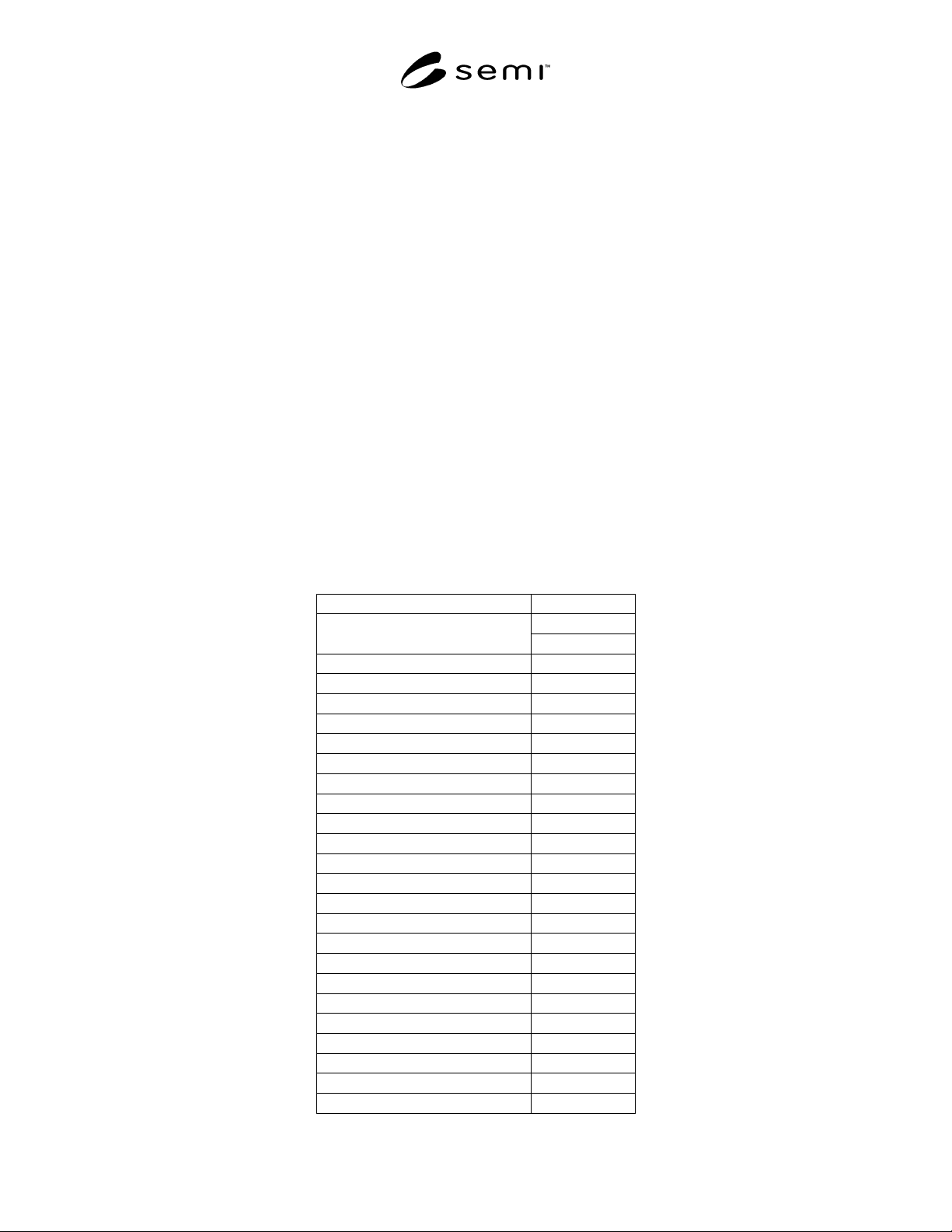
Table 1 Impurity Limits and Other Requirements for Acetic Acid
Previous SEMI Reference # C1.1-96
Grade 1
(Specification)
Assay (CH
3
COOH) 99.7% min
Color (APHA) 10 max
Residue after Evaporation 10 ppm max
Solubility in Water To pass test
Substances Reducing Dichromate To pass test
Substances Reducing Permanganate To pass test
Chloride (Cl) 1 ppm max
Phosphate (PO
4
) 1 ppm max
Sulfate (SO
4
) 0.5 ppm max
Acetic Anhydride [(CH
3
CO)
2
O] 0.1% max
Aluminum (Al) 0.3 ppm max
Arsenic and Antimony (as As) 0.005 ppm max
Boron (B) 0.2 ppm max
Calcium (Ca) 0.3 ppm max
Chromium (Cr) 0.2 ppm max
Copper (Cu) 0.1 ppm max
Gold (Au) 0.3 ppm max
Iron (Fe) 0.2 ppm max
Lead (Pb) 0.3 ppm max
Magnesium (Mg) 0.3 ppm max
Manganese (Mn) 0.3 ppm max
Nickel (Ni) 0.1 ppm max
Potassium (K) 0.3 ppm max
SEMI C18-0301 © SEMI 1978, 2001 ACETIC ACID4
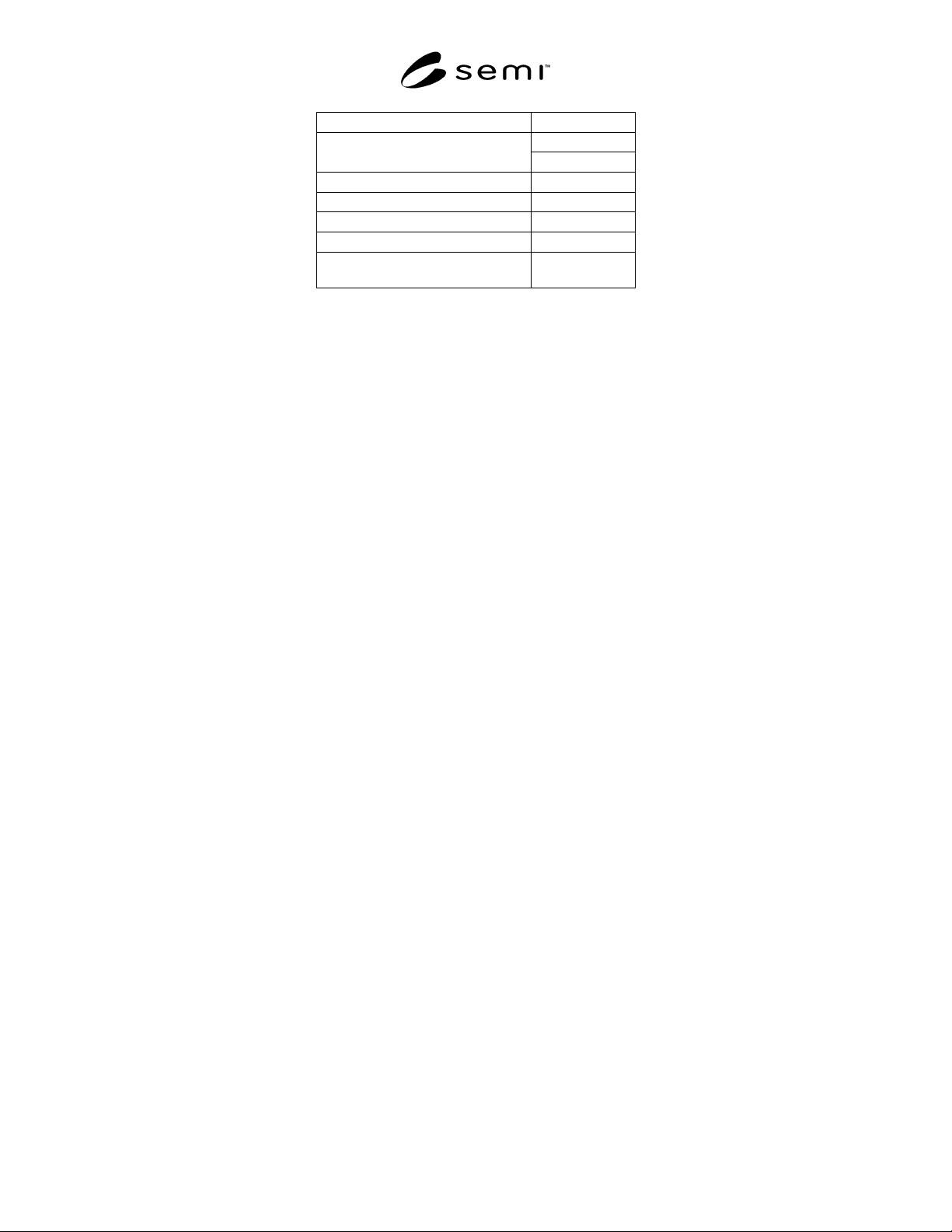
Previous SEMI Reference # C1.1-96
Grade 1
(Specification)
Sodium (Na) 0.3 ppm max
Tin (Sn) 0.3 ppm max
Titanium (Ti) 0.3 ppm max
Zinc (Zn) 0.3 ppm max
Particles in bottles:
size, #/mL
≥1.0 µm, 25 max
NOTICE: SEMI makes no warranties or representations as to the suitability of the standards set forth herein for any
particular application. The determination of the suitability of the standard is solely the responsibility of the user.
Users are cautioned to refer to manufacturer’s instructions, product labels, product data sheets, and other relevant
literature respecting any materials mentioned herein. These standards are subject to change without notice.
The user’s attention is called to the possibility that compliance with this standard may require use of copyrighted
material or of an invention covered by patent rights. By publication of this standard, SEMI takes no position
respecting the validity of any patent rights or copyrights asserted in connection with any item mentioned in this
standard. Users of this standard are expressly advised that determination of any such patent rights or copyrights, and
the risk of infringement of such rights, are entirely their own responsibility.
Copyright by SEMI® (Semiconductor Equipment and Materials
International), 3081 Zanker Road, San Jose, CA 95134. Reproduction o
f
the contents in whole or in part is forbidden without express written
consent of SEMI.