semi合集-English.pdf - 第882页
SEMI E116-0705 © SEMI 2002, 2005 14 Attribute Name Definition Access Reqd Form PreviousTaskName Name of the EPT Task previously running on this EPT module, prior to starting the current EPT Task. RO Y Text 0 to 80 charac…
SEMI E116-0705 © SEMI 2002, 2005 13
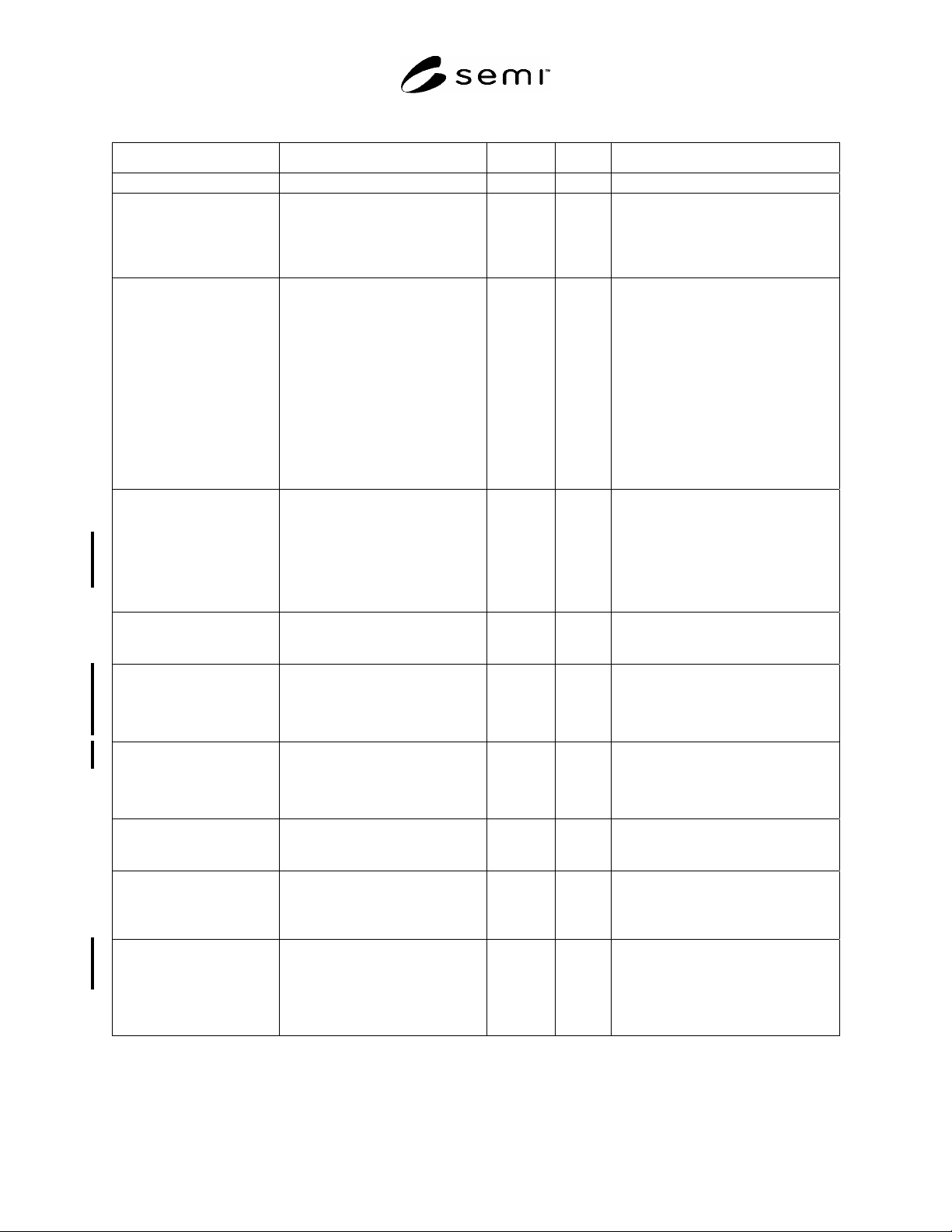
Table 3 EPTTracker Object Definition
Attribute Name Definition Access Reqd Form
ObjType Object type RO Y Text “EPTTracker”
ObjID Object identifier. A name assigned
by the Equipment designer
uniquely identifying the instance of
the EPTTracker object within this
Equipment.
RO Y Text 1 to 80 characters. Shall conform
to SEMI E39 restrictions on ObjID.
BlockedReason A numeric code that identifies the
most recent blocked condition of
the related EPT module.
RO Y Enumerated:
0 = Not Blocked
1 = Unknown
2 = Safety Threshold
3 = Error Condition
4 = Parametric Exception
5 = Aborting, Aborted
6 = Pausing, Paused
7 = Reserved
8 = Reserved
9 = Reserved
BlockedReasonText A description of the most recent
blocked condition of this
Equipment or EPT module. May
provide further details to
BlockedReason.
RO Y Text 0 to 80 characters
This attribute must be defined for both
equipment and module EPTTracker
objects. For the Equipment, a
BlockedReason value is determined by
the blocked module.
DisableEventOnTransition A list of zero to nine EPT State
Model transitions for which event
reporting to the host are disabled.
RW Y List of zero to nine integers in the
range 1–9.
EPTElementType A numeric code that indicates
whether this EPTTracker object
refers to the equipment or an EPT
module.
RO Y Enumerated
0 = Equipment
1 = Production EPT Module
2 = EFEM/LoadPort EPT Module
EPTState The current EPT state of this
equipment or EPT module.
RO Y Enumerated
0 = Idle
1 = Busy
2 = Blocked
EPTStateTime Time spent in the previous EPT
State, prior to entering the current
EPTState.
RO Y Unsigned integer
Value in seconds
EPTElementName A human-understandable name for
this equipment or module, which
must be unique among all objects
of EPTTracker type.
RO Y Text 0 to 80 characters
PreviousEPTState The previous EPT state of this
equipment or EPT module, prior to
entering the current EPTState.
RO Y Enumerated
0 = Idle
1 = Busy
2 = Blocked
3 = No State

SEMI E116-0705 © SEMI 2002, 2005 14
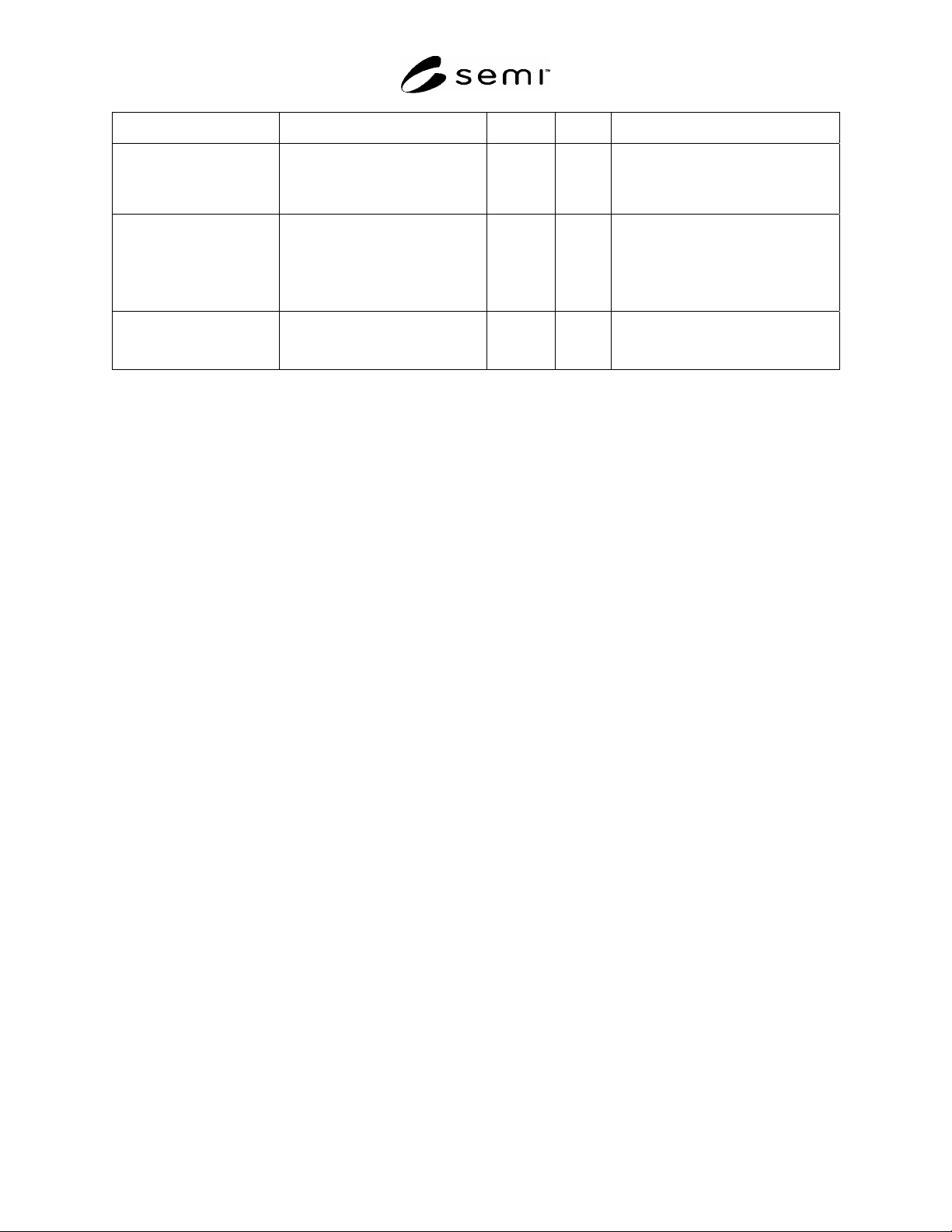
Attribute Name Definition Access Reqd Form
PreviousTaskName Name of the EPT Task previously
running on this EPT module, prior
to starting the current EPT Task.
RO Y Text 0 to 80 characters
This attribute must be defined for both
equipment and module EPTTracker
objects. For the Equipment, the value
of the PreviousTaskName attribute
may be left blank (empty string).
PreviousTaskType Type of the EPT Task previously
running on this EPT module, prior
to starting the current EPT Task.
RO Y Enumerated:
0 = No Task
1 = Unspecified
2 = Process -- adding value (e.g.,
exposing)
3 = Support -- incapable of adding
value (e.g., Handling/Transport)
4 = Equipment Maintenance (e.g.,
Equipment-initiated clean cycle)
5 = Equipment Diagnostics (e.g.,
Equipment-initiated health check)
6 = Waiting (e.g., chamber waiting for
a robot to remove a substrate)
This attribute must be defined for both
equipment and module EPTTracker
objects. For the Equipment, the value
of the PreviousTaskType attribute may
be set to 0.
TaskName Name of the EPT Task currently
running on this EPT module.
RO Y Text 0 to 80 characters
This attribute must be defined for both
equipment and module EPTTracker
objects. For the Equipment, the value
of the TaskName attribute may be left
blank (empty string).
TaskType The type of EPT Task currently
running on this EPT module.
RO Y Enumerated:
0 = No Task
1 = Unspecified
2 = Process -- adding value (e.g.,
exposing)
3 = Support -- incapable of adding
value (e.g., Handling/Transport)
4 = Equipment Maintenance (e.g.,
Equipment-initiated clean cycle)
5 = Equipment Diagnostics (e.g.,
Equipment-initiated health check)
6 = Waiting) e.g., chamber waiting for
a robot to remove a substrate)
This attribute must be defined for both
equipment and module EPTTracker
objects. For the Equipment, the value
of the TaskType attribute may be set to
0.
SEMI E116-0705 © SEMI 2002, 2005 15
Attribute Name Definition Access Reqd Form
TransitionTimestamp The timestamp when the most
recent transition occurred and
collection event was triggered that
set the tracker to its current state.
RO Y Formatted numeric text: timestamp
format – list specifics
16 characters
YYYYDDMMHHMMSSCC
Transition The most recent transition that
updated the tracker.
RO Y Enumerated:
1 = Transition 1
2 = Transition 2
…
9 = Transition 9
TrackerEventID Numeric identifier for the event
that is triggered for a change in the
state model for this tracker.
RO Y Integer
10.2 The object attributes TaskType and PreviousTaskType may take on one of the following values:
0. No Task — Value for TaskType when the EPT module is IDLE, and value for the PreviousTaskType when the
EPT module transitions out of the IDLE state or initial state (no state).
1. Unspecified — A placeholder for unspecified task types.
2. Process — Tasks expected under normal or desired manufacturing operations that are capable of adding value
by either (1) a physical-chemical change or (2) providing critical process information (e.g., inspection,
metrology). This includes tasks that are dependent on a recipe ID, dependent on parameters (e.g., target etch
thickness), or recipe and parameter independent (e.g., fixed purge time for all recipes or regardless target etch
thickness).
3. Support — Tasks expected under normal or desired manufacturing operations that are incapable of adding value
according to the criteria for a process task. These include alignment, handling and other transport, and
environmental changes by supporting EPT modules (e.g., pumpdown and vent operations in a load lock).
4. Maintenance — Any task that is intended to change the state of the equipment for the purpose of maintaining
equipment functionality or performance. This includes clean cycles, purges not expected under normal or
desired manufacturing operations, and certain reset operations that do not put the EPT module or equipment in a
non-operational state.
5. Diagnostics — Any task that obtains information about the status of the equipment for the purpose of
determining the equipment’s health or identifying an equipment problem(s). This excludes any task that is
intended to change the status of the equipment, as in a maintenance task. This also excludes metrology and
inspection tasks that provide critical information about the process even if those tasks also provide equipment
diagnostic information as a byproduct.
6. Waiting — An equipment-initiated task that indicates the module is encountering normal waiting periods as part
of its normal wafer processing scenario. A “Waiting” task applies when the module is awaiting a task to be
completed by an external source before it can continue/complete processing (e.g., processing chamber waiting
for robot to remove wafer, load port waiting for host ID/slot map verification, module waiting for a host
command to initiate processing and commence material unloading.) Material must be present in the module
when this task occurs.
10.2.1 NOTES: The following notes resolve ambiguities that arise from limitations of the equipment or EPT
module point of view. From the equipment or EPT module point of view:
Process maintenance activities (e.g., monitor wafers) and engineering activities (e.g., new process qualification
runs) may be indistinguishable from normal or desired manufacturing operations. These operations shall be
reported as either process or support operations.
Equipment maintenance activities (e.g., equipment qualification runs monitor wafers) may be indistinguishable
from normal or desired manufacturing operations. These operations shall be reported as either process or
support operations.
Activities executed for exception handling (e.g., pausing, aborting, stopping, or otherwise moving to a safe
state) may be indistinguishable from support tasks. Examples include handling/transporting wafers to safe
locations, pumping, venting, purging, etc. If the equipment or module implementing EPT does not have