semi合集-English.pdf - 第6923页
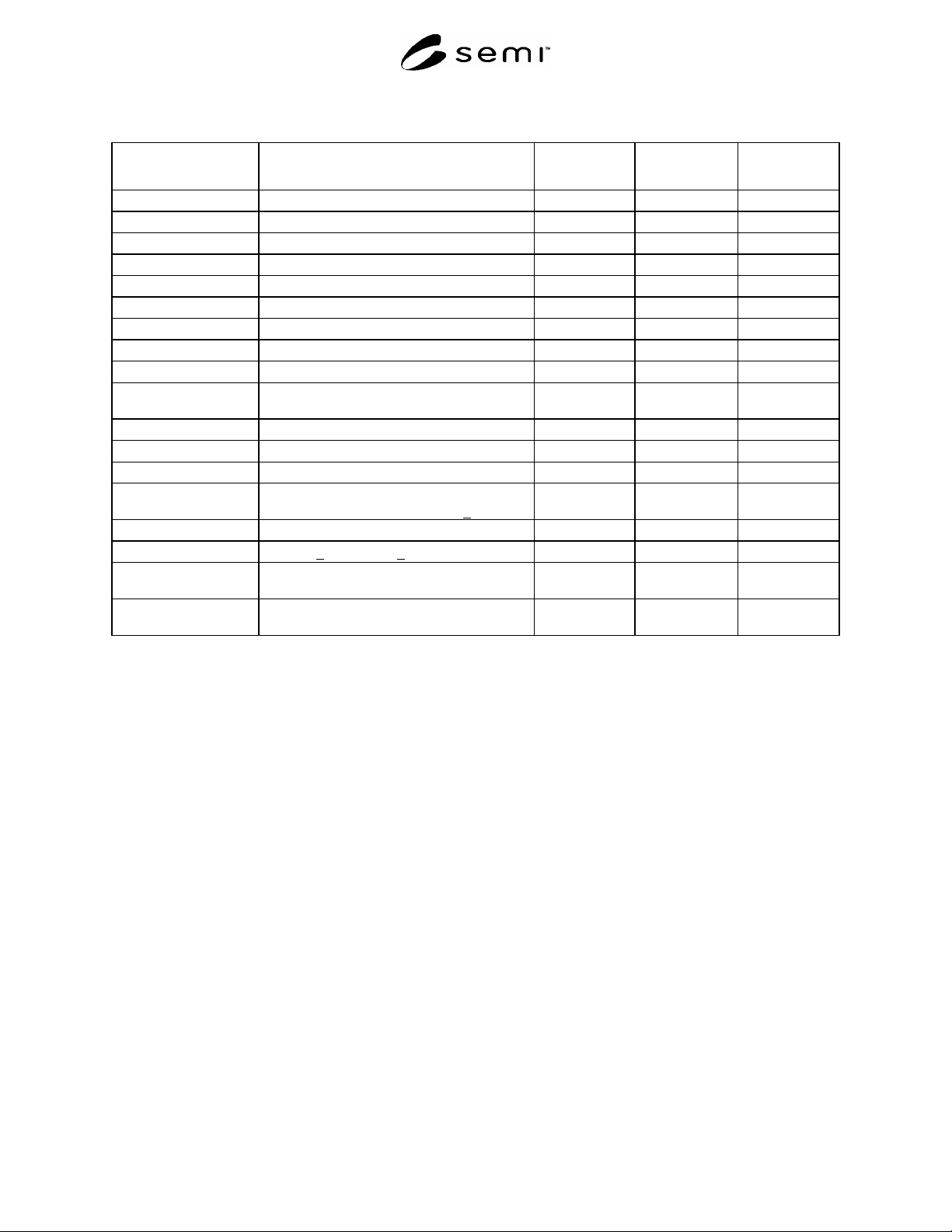
SEMI S8-0705 © SEMI 1995, 2005 20 Table A2-1 Crite ria to Determine Appropriate MH Analysis Tool(s) MH Type “If” Condition NIOSH (1991) Bio Model Psycho Physical 2 Hand Lift or Lower F < 1 lift/5 minutes F >…

SEMI S8-0705 © SEMI 1995, 2005 19
APPENDIX 2
LIFTING, STRENGTH, AND MATERIALS HANDLING
NOTICE: The material in this appendix is an official part of SEMI S8 and was approved by full letter ballot
procedures by the North American Regional Standards Committee.
A2-1 General Considerations
A2-1.1 For recommended guidelines regarding the percentage of a user's maximum grip strength to be exerted in
execution of a task see Related Information 1, Table R1-3.
A2-1.2 Where standard product or containers are to be handled at equipment load and unload stations,
mechanization should be considered for orientation and handling. Where manual handling is necessary, the design
should reduce extended reaching, lifting, pulling, and awkward postures. Simultaneous lifting and twisting should be
avoided. Load, unload, and lift over points should be located such that the floor to hand height is 84–107 cm
(33–42 in.), optimal design target is 102 cm (40 in.).
A2-1.3 Handles or cutouts should be designed to facilitate use of the power grip (e.g., similar to that used to hold a
pistol). Avoid handles that require pinch grips or awkward postures. Handles should allow carrying close to the
body.
A2-1.4 Lifting and handling tasks performed in a stooping position should be avoided. Stooping occurs when the
vertical material handling height is less than 84 cm (33 in.), or the horizontal reach distance is greater than 46 cm
(18 in.) in front of body.
A2-1.5 For two handed push/pull activities the floor to hand height should be between 97 cm (38 in.) and 112 cm
(44 in.).
A2-1.6 Consideration should be given to the standing surface to minimize the risk of slips and falls.
A2-1.7 Awkward postures should be avoided. Refer to Related Information 1, Table R1-2 for a list of
recommended ranges of awkward postures to avoid.
A2-1.8 For a 2-person handling task, there should be adequate coupling locations and adequate body clearance for
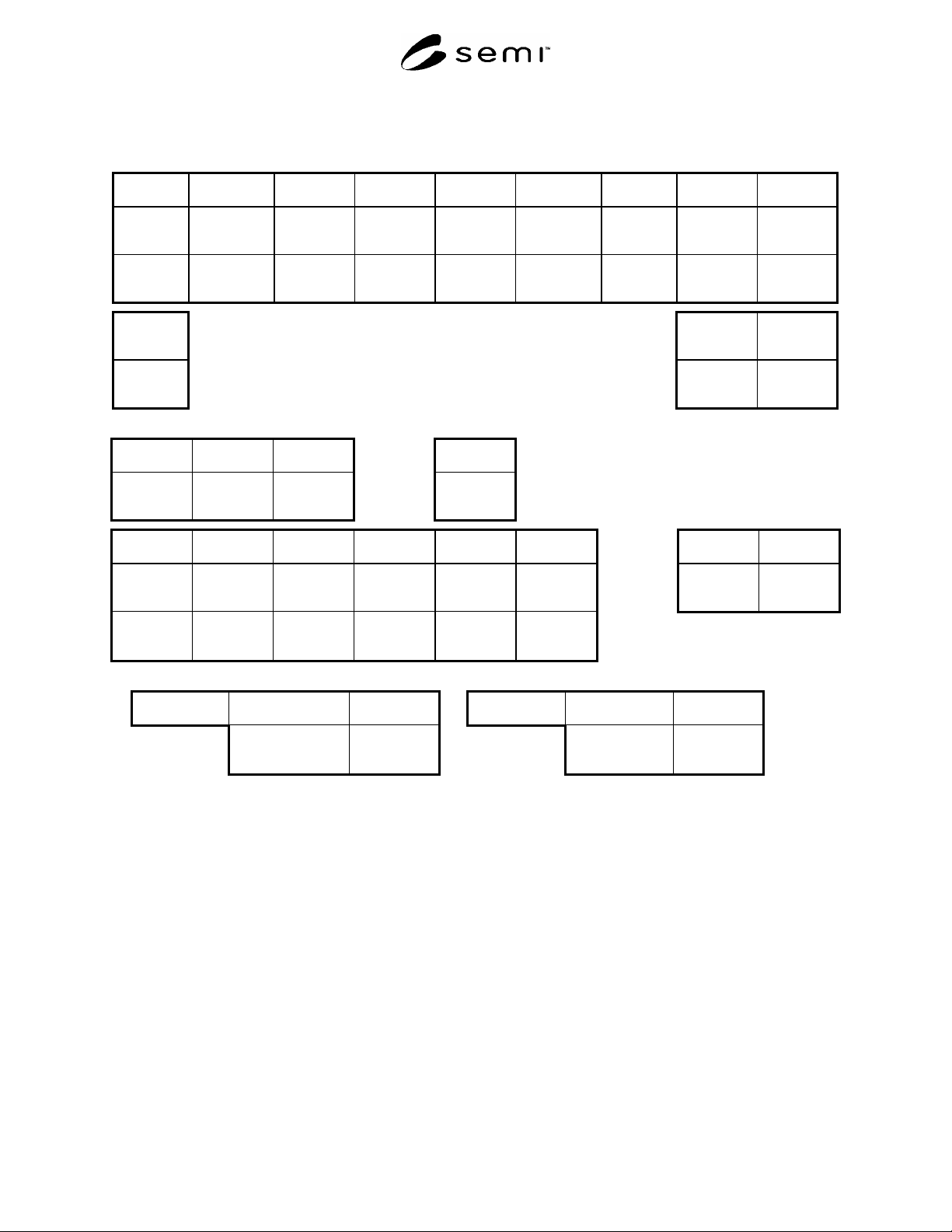
the activity. Analyses need to be performed and documented for each person lifting if any of the parameters
(e.g., horizontal reach) are different.
A2-2 Selecting and Using the Appropriate MMH Analysis Tool(s)
A2-2.1 Three general MMH evaluation tools are identified in the following matrix. The three tools are the
“Application manual for the Revised NIOSH Lifting Equation” lifting equation, biomechanical models, and
psychophysical capacity tabular data. Table A2-1 was designed to assist in determining which analysis tools are
appropriate for a particular task. For each unique characteristic of the task, a checkmark in the analysis tool column
indicates that the analysis tool is appropriate. If there is any aspect of the task that does not show a check mark in a
particular tools column, that analysis tool is not appropriate to evaluate the task. Note that in many situations
multiple tools are appropriate. In situations where the 1991 NIOSH equation is appropriate, the assessor should use
it, because it typically will provide the most conservative results. In other situations, the assessor may use any of the
appropriate tools.
A2-2.2 Correct application of the 1991 NIOSH equation is described in Waters, Thomas, et. al., Application manual
for the Revised NIOSH Lifting Equation, U.S. Department of Health and Human Services (NIOSH), Cincinnati,
OH, 1994.
A2-2.3 There are many sources of psychophysical data. One such source is A. Mital, A.S. Nicholson, M.M. Ayoub,
A Guide to Manual Materials Handling, Taylor and Francis, London, 1993.
A2-2.4 Biomechanical analysis can be completed using biomechanical modeling software.
SEMI S8-0705 © SEMI 1995, 2005 20
Table A2-1 Criteria to Determine Appropriate MH Analysis Tool(s)
MH Type “If” Condition NIOSH (1991) Bio
Model
Psycho
Physical
2 Hand Lift or Lower F < 1 lift/5 minutes
F > 1 lift/5 minutes
F > 9 lifts/minute
Twisting Occurs
(3D)
Handle Design is an Issue
Limited Headroom During Lift
Work Duration > 8 hours
Load Placement Clearance is an Issue
Load Asymmetry is an Issue
(3D)
Length of Object Measured in Frontal Plane of
Body > 26"
(3D)
Exposure to Heat Stress
1 Hand Lifts Posture = Standing
Posture = Kneeling or Seated
1 or 2 Hand Carry NOTE: Carry is Operationally Defined as
Horizontal Movement of Load >
7 feet
1 or 2 Hand Push/Pull Distance < 7 feet and F < 1 Push/Pull/5 minutes
Distance > 7 feet and F > 1 Push/Pull/5 minutes
Push/Pull Task Requires Significant Sustained
Forces (e.g., slide box along floor)
Lift/Lower in Non-
Standard Postures
Kneeling, Sitting, or Lying
#1
Under Bio Model, 3D indicates that only a 3-dimensional biomechanical model is appropriate for the task condition.
SEMI S8-0705 © SEMI 1995, 2005 21
Table A2-2 Two Hand Lift/Lower Manual Material Handling Analysis Documentation
NIOSH Analysis
Horizontal
(origin)
Horizontal
(destination)
Vertical Distance Asymmetry
(origin)
Asymmetry
(destination)
Frequency Duration Coupling
measure measure measure measure measure measure measure measure measure
multiplier multiplier multiplier multiplier multiplier multiplier multiplier multiplier multiplier
Precision
placement
req.
Recom-
mended
weight limit
Lifting index
Psychophysical Analysis
Box size Range of
lift
Frequency MAWL
Headroom
limitation
Load
clearance
Load
asymmetry
Asymmetry Work
duration
Coupling Adjusted
MAWL
Lifting
index
measure measure measure measure measure measure
multiplier multiplier multiplier multiplier multiplier multiplier
Conclusions
one person lift Recommended
weight limit
Lifting index two person lift Recommended
weight limit
Lifting index