semi合集-English.pdf - 第2851页
SEMI E105-0701 © SEMI 2000, 2001 2 Scheduling Manager Scheduling Component Factory Operations requests activity decisions releases product (lot starts) Factory Planning (Enterprise) Product Management requests activity f…

SEMI E105-0701 © SEMI 2000, 20011
SEMI E105-0701
PROVISIONAL SPECIFICATION FOR CIM FRAMEWORK SCHEDULING
COMPONENT
This specification was technically approved by the Global Information & Control Committee and is the direct
responsibility of the North American Information & Control Committee. Current edition approved by the
Japanese Regional Standards Committee on February 1, 2001. Initially available at www.semi.org April
2001; to be published July 2001. Originally published October 2000.
1 Purpose
1.1 The Scheduling Component supports Factory
Operations, Material Transport and Storage, Production
Machine, and Equipment Tracking and Maintenance
components by ordering, in time, jobs that process
material on equipment, move material, and maintain
equipment. The scheduler uses knowledge of product
demand, equipment and material state, process flows,
throughput bottlenecks, operational policy and
constraints, and other information to recommend jobs
that maximize effective utilization of factory resources
to satisfy product demand and planned objectives.
1.2 Increased control over operations requires an
active Scheduling Component that can respond to
factory events and changes in state and dynamically
adjust the schedules for material processing, material
transport and equipment maintenance. The Scheduling
Component can react to inventory levels of material in
the factory to adjust priorities to minimize queue sizes
and ensure that use of bottleneck equipment is opti-
mized to keep WIP inventory levels at desired levels.
1.3 The Scheduling Component can minimize turn
around time (TAT) by coordinating material transport
(for substrates and durables) with processing to reduce
equipment idle time. The Scheduling Component can
sequence activities to minimize setup time. It can also
respond to scheduled and unscheduled equipment
down-time to minimize impact on turn around time. In
addition to minimizing overall TAT, it can react to the
priorities for urgent lots to move them through the
process flow in the minimum possible time while
adjusting the schedules of lower-priority lots that are
impacted.
2 Scope
2.1 The primary run-time responsibilities of the
Scheduling Component are to monitor resource and
material state and apply scheduling and dispatching
decision mechanisms to identify the next activity
(dispatching) or sequence of activities (scheduling) for
factory resources. The Scheduling Component includes
an interface that supports both scheduling and
dispatching. Figure 1 illustrates the interactions
between the Scheduling Component and other
components of the CIM Framework. This illustration
does not reflect all of the many inputs to the Scheduling
Component that are required to provide it with the
current status of the factory resources.
2.2 As described in this standard, the Scheduling
Component produces activity option and activity
forecast lists. These lists are produced by combining
the factory model and status information from other
components with scheduling policies in the Scheduling
Component. For example, the Scheduling Component
combines data from the Specification Component on
how products are made with status data from the
Equipment and Product Management Components to
give activity options for a machine.
2.3 The Factory Operations Component uses the
Scheduling Component services to orchestrate the man-
agement of machines and production of lots. For exam-
ple, when a tool becomes available, Factory Operations
uses the Activity Options list to select the next lot to
process on the tool. Factory Operations then works
with other components to execute the production job for
the lot on the machine. Executing the production job
changes the state of lot and tool in other components.
These status changes are then used by the Scheduling
Component when it produces new activity lists.
2.4 The Scheduling Manager supp orts Factory
Operations by providing an answer to questions like,
“What is next for this material or resource?” The
answer may be based on evaluation of current or future
constraints and objectives. Although the dispatcher's
output takes the form of a decision for the next activity
for the target resource, the interface may also support
manual scenarios by providing a list of prioritized
activities from which the decision is selected.
2.5 The Scheduling Manager interface also provides
forecasts of future activities projected to occur after the
next activity. By simulating anticipated future activity
sequencing and execution timing the scheduler can
generate forecasts that predict future responses from the
dispatcher for subsequent requests. These forecasts are
subject to change as factory conditions change, but they
offer the best current projection of future activity
decisions.
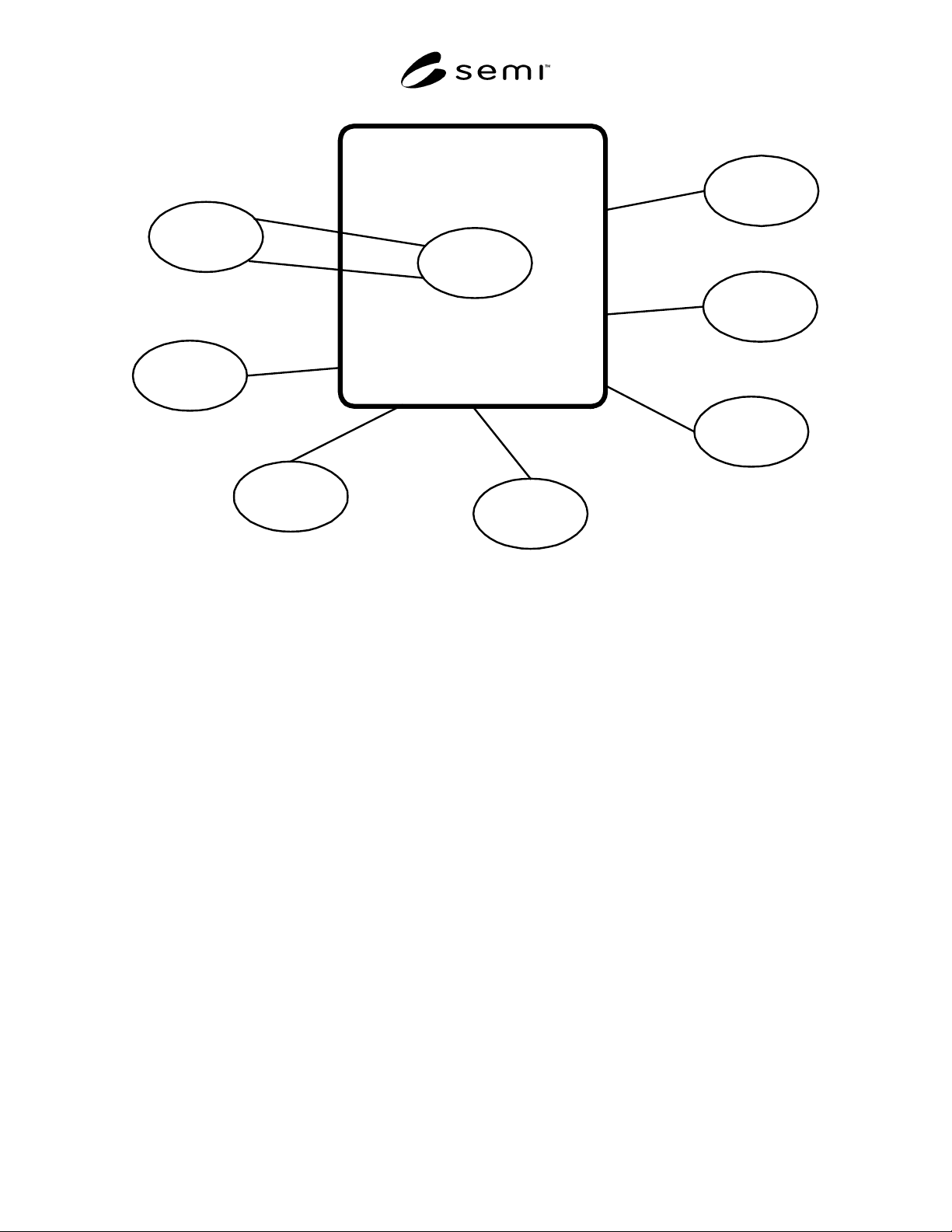
SEMI E105-0701 © SEMI 2000, 2001 2
Scheduling
Manager
Scheduling Component
Factory
Operations
requests activity
decisions
releases product
(lot starts)
Factory
Planning
(Enterprise)
Product
Management
requests activity
forecasts
Equipment
Tracking and
Maintenance
Specification
Factory
Labor
provides product
status
provides
equipment status
provides activity
specifications
provides
operator status
Material
Transport &
Storage
provides material
location
Figure 1
Scheduling Component Interactions
2.6 This specification does not describe the definition
of the policies used by the Scheduling Component to
produce activity lists. This is left to component
implementors.
2.7 This standard does not purport to address safety
issues, if any, associated with its use. It is the
responsibility of the users of this standard to establish
appropriate safety and health practices and determine
the applicability of regulatory limitations prior to use.
3 Limitations
3.1 Provisional Status — This specification is
designated as provisional due to known areas that need
to be completed. The following items summarize the
deficiencies of the provisional specification to be
addressed before a subsequent ballot to upgrade it to
full standard status.
3.1.1 Dependence on Factory Operations Component
— The Scheduling Component provides specifications
of activities that are executed by the Factory Operations
Component in the form of production jobs, transport
jobs and maintenance jobs. The specification of Factory
Operations may require changes to the activity
specification properties of the Scheduling Component.
When the Specification for CIM Framework Factory
Operations Component is complete, this dependency
can be resolved.
3.1.2 Specification of Event Subscriptions — The
Scheduling Component maintains a current status of the
factory resources and material by receiving event
notifications of occurrences that indicate changes in
other components. Events are specified with the
component responsible for publishing the event
notifications. Until all of the required event formats are
defined as part of the publishing component
specification, the inputs to the Scheduling Component
will be defined only in general terms. When event
specifications are complete, these event subscriptions
can be specified.
3.1.3 Initialization — The Scheduling Component
does not currently provide interfaces that allow the
representation of factory conditions to be initialized for
the start-up of dispatching and scheduling. The addition
of initialization interfaces will be added or deemed out
of scope prior to upgrade to full standard status.
4 Referenced Standards
4.1 SEMI Standards
SEMI E81 — Provisional Specification for CIM
Framework Domain Architecture
SEMI E105-0701 © SEMI 2000, 20013
SEMI E97 — Provisional Specification for CIM
Framework Global Declarations and Abstract Interfaces
SEMI E102 — Provisional Specification for CIM
Framework Material Transport and Storage Component
4.2 Other Documents
UML Notation Guide, Version 1.1, document number
ad/97-08-05, Object Management Group.
1
ISO/IEC International Standard 14750 (also ITU-T
Recommendation X.920): Information Technology –
Open Distributed Processing – Interface Definition
Language
2
5 Terminology
5.1 Definitions
5.1.1 activity — work performed as part of the
manufacturing operations of a factory. Activities may
be specified formally by a predefined type of job
specification (for example, Production Job, Transport
Job or PM Job), or they may be represented by
identifying the minimal set of resources and material
needed to allow subsequent completion of the job
specification. An activity is the result of dispatching or
scheduling.
5.1.2 dispatching — generation of a decision or option
for the next activity involving a particular factory
resource or material. The dispatch result is determined
by evaluating the current state of the factory, the
priorities and requirements for the activities, and the
relationship of the activities to one another. Dispatching
returns only the immediately applicable part of a
schedule.
5.1.3 factory planning — recommendation of lot starts
for a particular production facility over an extended
period of time. The factory plan is determined by
predicting future changes in factory state and available
capacity as lots progress through production. This
prediction is used to determine the optimum sequence
of lot starts to best achieve the production goals of the
facility. Factory planning is typically the responsibility
of enterprise systems.
5.1.4 scheduling — generation of a forecast of future
time sequenced activities involving factory resources or
material. The schedule is based on the current state of
the factory, the priorities and requirements for the
activities, the relationship of the activities to one
1 UML Notation Guide v1.1 is available to the general public at
http://www.omg.org/cgi-bin/doclist.pl, +1-508-820 4300, Object
Management Group, Inc. , Framingham Corporate Center, 492 Old
Connecticut Path, Framingham, MA 01701.
2 ISO Central Secretariat, 1, rue de Varembé, Case postale 56, CH-
1211 Genève 20, Switzerland
another and knowledge of factory level goals and
capacity. Scheduling covers activities projected to
occur over a longer future time interval than
dispatching.
6 Requirements
6.1 Scheduling Component — The Scheduling
Component provides a single interface called the
SchedulingManager with operations for both
dispatching and scheduling.
6.1.1 Any resource or material within the factory may
have a next activity defined for it. The
SchedulingManager interface is responsible for
identifying activities that answer questions such as:
• What’s next for this Machine?
• Where next for this Lot?
• What’s next for this Operator?
6.1.2 The SchedulingManager interface is also
responsible for generating a time-sequenced forecast of
future activities for a resource or for material within the
factory. This forecast is based on projections from the
current factory state and may be updated as actual
activities are dispatched and executed.
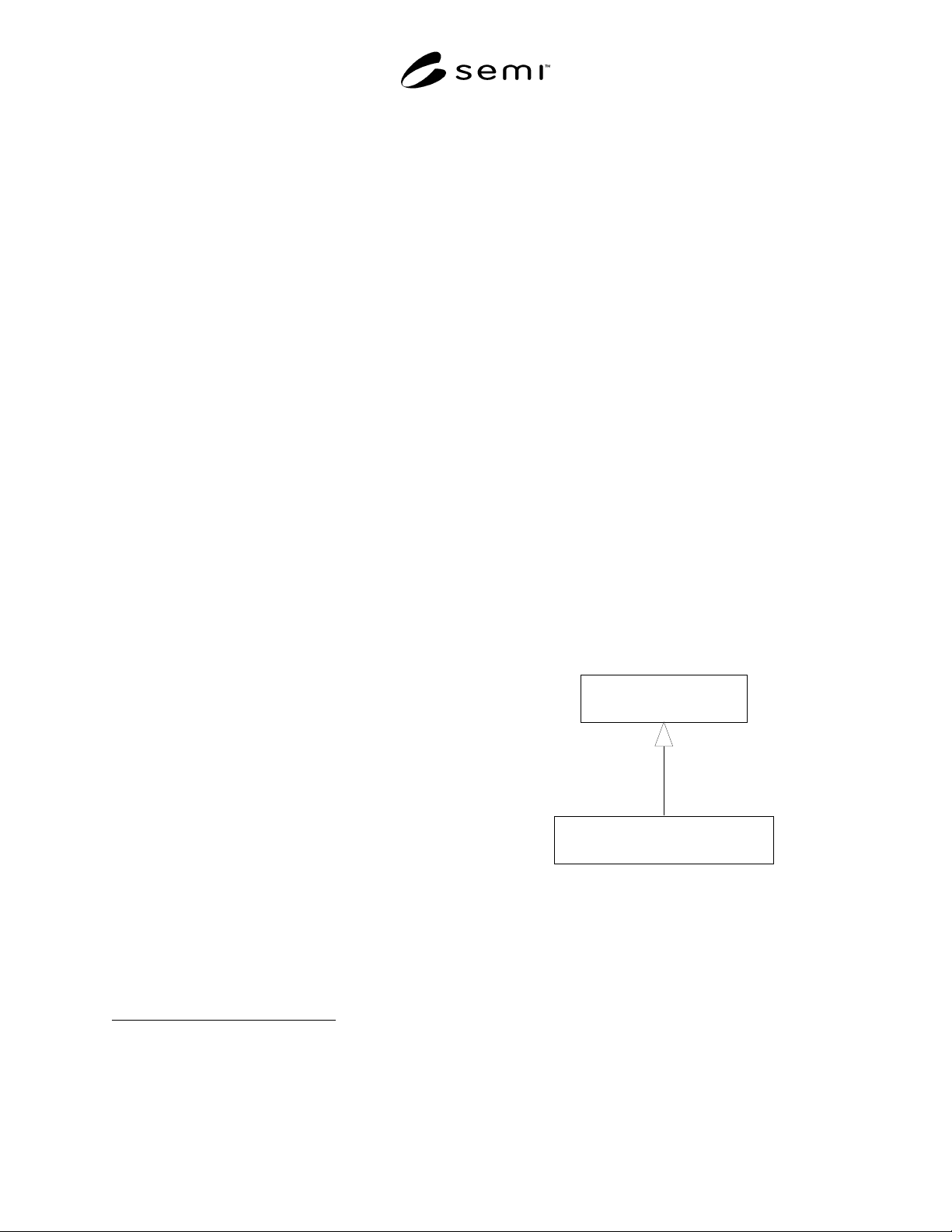
6.1.3 The Scheduling Component Information Model
is shown in Figure 2.
ComponentManager
(from Factory Component)
SchedulingManager
Figure 2
Dispatching Component Information Model