semi合集-English.pdf - 第3432页
SEMI E133-0705 © SEMI 2004, 2005 13 The message is a res ponse to a request for se rvice(s) from that AE, e.g., a reply message. 9.2.3.2. 2 DataCollection — A set of data and associated context for th at data that conf…
SEMI E133-0705 © SEMI 2004, 2005 12
9.2.3.2.1.2.1.2 The specification of how the AEs will consume the information is beyond the scope of this standard.
9.2.3.2.1.2.1.3 The AEType enumeration of “PCS” is used to indicate a generic PCS type, or is an unspecified type.
9.2.3.2.1.2.1.4 An AEInstance value is not specified indicates that the instance of AEType is unspecified.
9.2.3.2.1.2.1.5 When multiple PCSAETarget instance values are specified, the target PCS application to which
these values refer should execute the PCSJob associated with the PCSJobID in sequence. The mechanism for
ensuring this behavior is beyond the scope of this standard.
9.2.3.2.1.2.1.6 Instructions is an ordered list of elements, each of which is an instruction and is of type text. Note
that no two elements in the ordered list can have the same value. An instruction is an attribute that relates a specific
task that is being requested to be carried out by a targeted AEInstance.
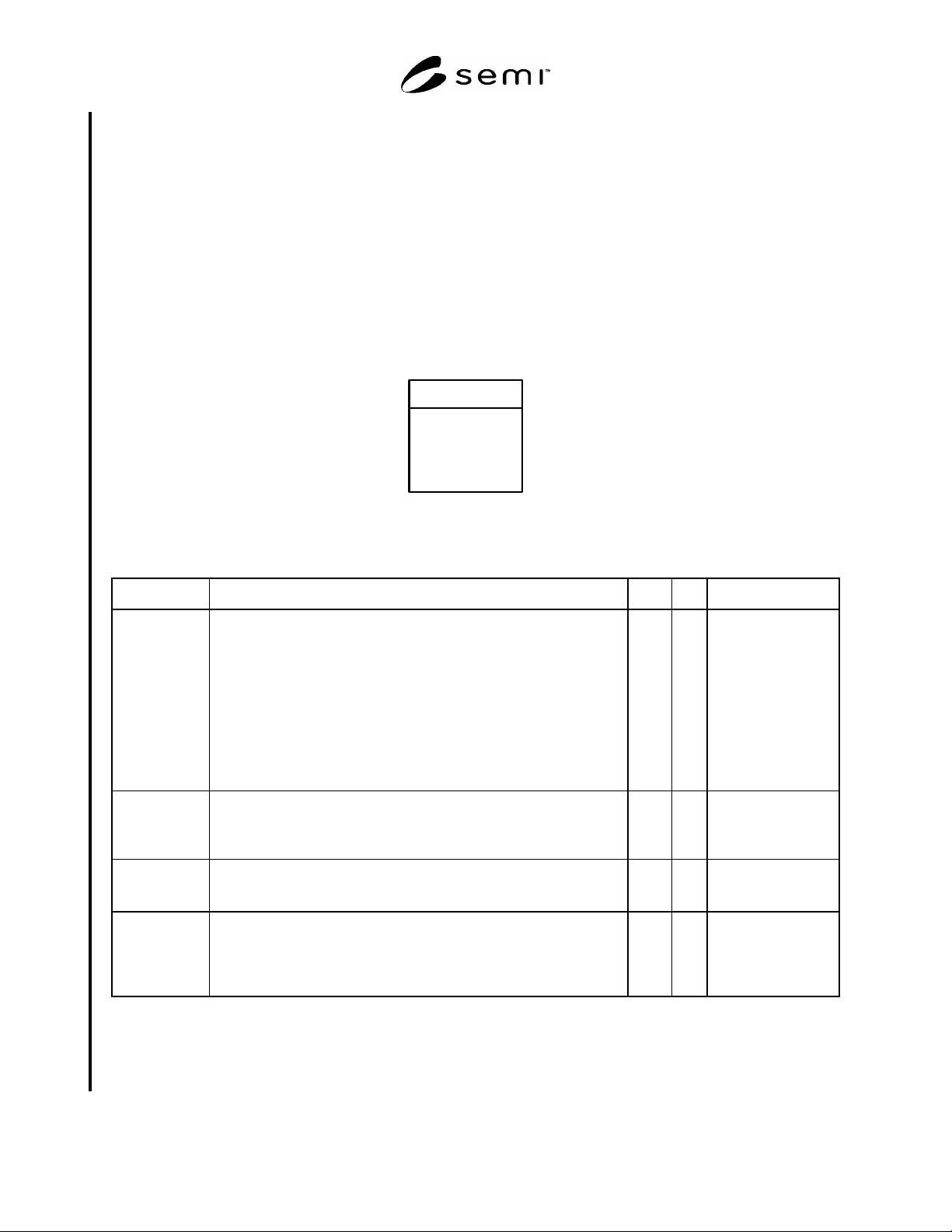
9.2.3.2.1.3 Status — This conditional attribute class relates properties of the success or failure of a PCS AE,
identified in PCSAETargets, to execute a PCSJob. The attribute has the following form:
StatusElement
Source
Code
Description
Extension
Figure 5
StatusElement Data Structure
Table 8 StatusElement Attribute Definition
Attribute Name Description Access Reqd Form
Source Represents the document from where the attribute code value is defined.
For example “Source” could identify a SEMI standards document. For
status codes defined by SEMI standards, the content of Source is the urn
representation of the standard number. For status codes defined by a
supplier, it is the urn representation of the supplier’s name. (e.g., for
SEMI E132 errors, the content of “Source” is: urn:semi-org:E132; for
supplier company errors, for instance, where company name is “Acme”,
the content is: urn:Acme-com) Additional information may be included
by the supplier by adding such information after the “:” colon symbol and
separating the fields with a “.” period symbol. Please refer to SEMI
E121 for additional information.
NA N Text.
Code A value that directly maps to a particular specification status code list.
The source of this list is beyond the specification of this document. A
status code of zero indicates that no error has occurred, while any non-
zero status indicates an error has occurred.
NA Y Integer.
Description A human readable description of the corresponding code attribute being
reported. It maps directly to the definition of the Code attribute.
NA N An unordered list of
structured data; see
below.
Extension This attribute allows the supplier to include additional information
regarding the status code encountered. Additional information may be
supplied in this attribute to provide more detail about any error (Ex.
Common Component, Code 5001, “Insufficient Arguments
Provided:Argument “SessionID” missing”).
NA N Any.
9.2.3.2.1.3.1 The existence of the StatusElement attribute is conditional on the properties of the message containing
a data structure of type AnalysisEngineDataSet. The StatusElement attribute shall exist if and only if the following
conditions apply:
The message is an output from an AE.
SEMI E133-0705 © SEMI 2004, 2005 13
The message is a response to a request for service(s) from that AE, e.g., a reply message.
9.2.3.2.2 DataCollection — A set of data and associated context for that data that conforms to the PCS AE common
input/output structure as defined in ¶9.2.2.1
Table 9 Attributes of DataCollection
Attribute Name Description Access Reqd Form
BinCategory An enumerated identifier of the type of data collection among the
possible types defined in the collection type enumeration, listed in Table
4.
NA Y CollectionType — As
defined.
9.2.3.2.2.1 CollectionType — An enumeration of BinCategory as defined in Table 4.
9.2.3.2.3 DataItem — An individual component of a data collection that has meaning in the PCS environment.
Each data item has a role of either “context” or “data” as determined by the client of the PCS AE.
Table 10 Attributes of DataItem
Attribute Name Description Access Reqd Form
Name Human-readable name for DataItem NA Y StringValue — See
rules for naming
below.
Value An assigned or calculated quantity NA Y AbstractValue — As
defined in SEMI
E134.
9.2.3.2.3.1 Name — This attribute is used to provide a level of understanding of the meaning and purpose of the
DataItem. Names shall consist of alphanumeric characters, spaces, hyphens and underscores. Names shall start
with an alpha character, and shall not contain leading or trailing spaces.
9.2.3.2.3.2 Value — AbstractValue as defined in SEMI E134 is an abstract base class that is used to represent
standard types including: Integer, Real, Boolean, String, Binary, Structure, Array, and Enumerations. In this way,
parameter values collected via SEMI E134 may be passed directly into the PCS compliant AE via the value attribute
of a DataItem. Refer to SEMI E134 for further definition of the AbstractValue type. AbstractValue base class
allows for arbitrarily complex data items to be passed into the AE.
9.2.3.2.3.3 A DataItem that belongs to a DataCollection whose CollectionType is “Globals” may not serve a role of
data (i.e., it can only serve the role of context).
9.2.3.2.3.4 It is not required that the PCS AE utilize a data item in the same role (Data or Context) as is specified by
the PCS AE client, however the PCS AE is required to maintain the role representation in I/O data structures
produced or consumed across a PCS AE interface.
9.2.3.3 Ordering of Elements Within An AnalysisEngineDataSet — In addition to compliance with a data structure
model, this standard also defines rules governing ordering of classes and attributes within each
AnalysisEngineDataSet instance, corresponding to the data content of an AE I/O message. Figure 4 provides a
general illustration of this ordering. The following are rules governing that ordering.
9.2.3.3.1 The first attribute of any AnalysisEngineDataSet shall be the Process Control System Job ID (PCSJobID),
if the PCSJobID value has been determined as defined in ¶9.2.3.2.1.
9.2.3.3.2 The first attribute of any DataCollection shall be BinCategory.
9.2.3.3.3 The first DataCollection shall be of BinCategory “Globals” if the AnalysisEngineDataSet contains a
DataCollection of that kind. At most one DataCollection shall be of BinCategory “Globals” in any
AnalysisEngineDataSet.

SEMI E133-0705 © SEMI 2004, 2005 14
9.2.3.3.4 In each DataCollection all DataItems whose role is “Context” shall occur before the first DataItem whose
role is “Data” occurs.
Figure 6
Illustration of Ordering of Information in an AnalysisEngineDataSet Instance
(Partial example; “…” is used to indicate possible continuation in the listed format; PCSJobID in this
example is aligned with specifications in SEMI E120.1)
PCSJobID == “[0-9a-fA-F]{8}-[0-9a-fA-F]{4}-[0-9a-fA-F]{4}-[0-9a-fA-F]{4}-[0-9a-fA-F]{12}”
PCSAETargets
APCSAETarget: PCSAETarget
AEType == “R2R”
AEInstance == 1
Instructions
Instruction == “R2RCalculateControlAdvice”
Extension == “execute serially”
Status
AStatusElement: StatusElement
Source == “urn:semi-org:E132”
Code == 0
ADataCollection: DataCollection
BinCategory == “Globals”
Role == “Context”
ADataItem: DataItem
AName: (type == text)
AValue: (type == any)
ADataItem
AName: (type == text)
AValue: (type == any)
BinCategory == “ModuleData”
Role == “Context”
ADataItem: DataItem
AName: (type == text)
AValue: (type == any)
…
Role == “Data”
ADataItem: DataItem
AName: (type == text)
AValue: (type == any)
…
BinCategory == “ProcessData”
Role == “Context”
ADataItem: DataItem
AName: (type == text)
AValue: (type == any)
…
Role == “Data”
ADataItem: DataItem
AName: (type == text)
AValue: (type == any)
…
…