semi合集-English.pdf - 第6882页
SEMI S4-0304 © 1992, 2004 4 7.2 Containing Different Ch emicals in a Cabinet 7.2.1 Except as described below, chemicals should be contained i n differe nt gas cabinet s if they do not possess exactly the same cl assifica…
SEMI S4-0304 © SEMI 1992, 2004 3
b) It is designated as an irritant according to European
Directive 67/548/EEC, on the approximation of the
laws, regulations and administrative provisions relating
to the classification, packaging and labeling of
dangerous substances including its amendments and
adaptations to technical progress.
5.2.14 liquid — having its molecules moving freely
with respect to each other so as to flow readily, unlike a
solid, but because of cohesive forces not expanding
infinitely like a gas. [SEMI F78]
5.2.15 other health hazard —A chemical for which
there is statistically significant evidence based on at
least one study conducted in accordance with
established scientific principles that acute or chronic
health effects may occur in exposed employees, other
than those for which a separate classification is defined.
The term “other health hazard” includes chemicals
which are carcinogens, reproductive toxins, sensitizers,
hepatotoxins, nephrotoxins, neurotoxins, mutagens,
agents which act on the hematopoietic system, and
agents which damage the lungs, skin, eyes, or mucous
membranes.
5.2.16 oxidizer chemical — a chemical which will
support combustion or increase the burning rate of a
combustible or flammable material with which it may
come in contact.
5.2.17 pyrophoric chemical — a chemical which upon
contact with air will ignite spontaneously at or below a
temperature of 54°C (130°F).
5.2.18 separation — the condition of having the risks
of mixing of chemicals and of exposure of cylinders to
chemicals other than those they contain managed by the
cylinders being in different gas cabinets.
5.2.19 toxic chemical — A chemical is considered to
be toxic if:
a) It that has a median lethal concentration (LC
50
) in air
of more than 200 parts per million but not more than
2,000 parts per million by volume of gas or vapor, or
more than 20 milligrams per liter of mist, fume, or dust,
when administered by continuous inhalation for one
hour (or less if death occurs within one hour) to albino
rats weighing between 200 and 300 grams each, or
b) It is designated as “Toxic” according to European
Directive 67/548/EEC on the approximation of the
laws, regulations and administrative provisions relating
to the classification, packaging and labeling of
dangerous substances including its amendments and
adaptations to technical progress.
5.2.20 unstable (reactive) — a chemical which in the
pure state, or as produced or transported, will
vigorously polymerize, decompose, condense, or will
become self-reactive under conditions of shock,
pressure, or temperature.
5.2.21 water reactive — a chemical that reacts with
water to release a chemical that is either flammable or
presents a health hazard.
6 Classification
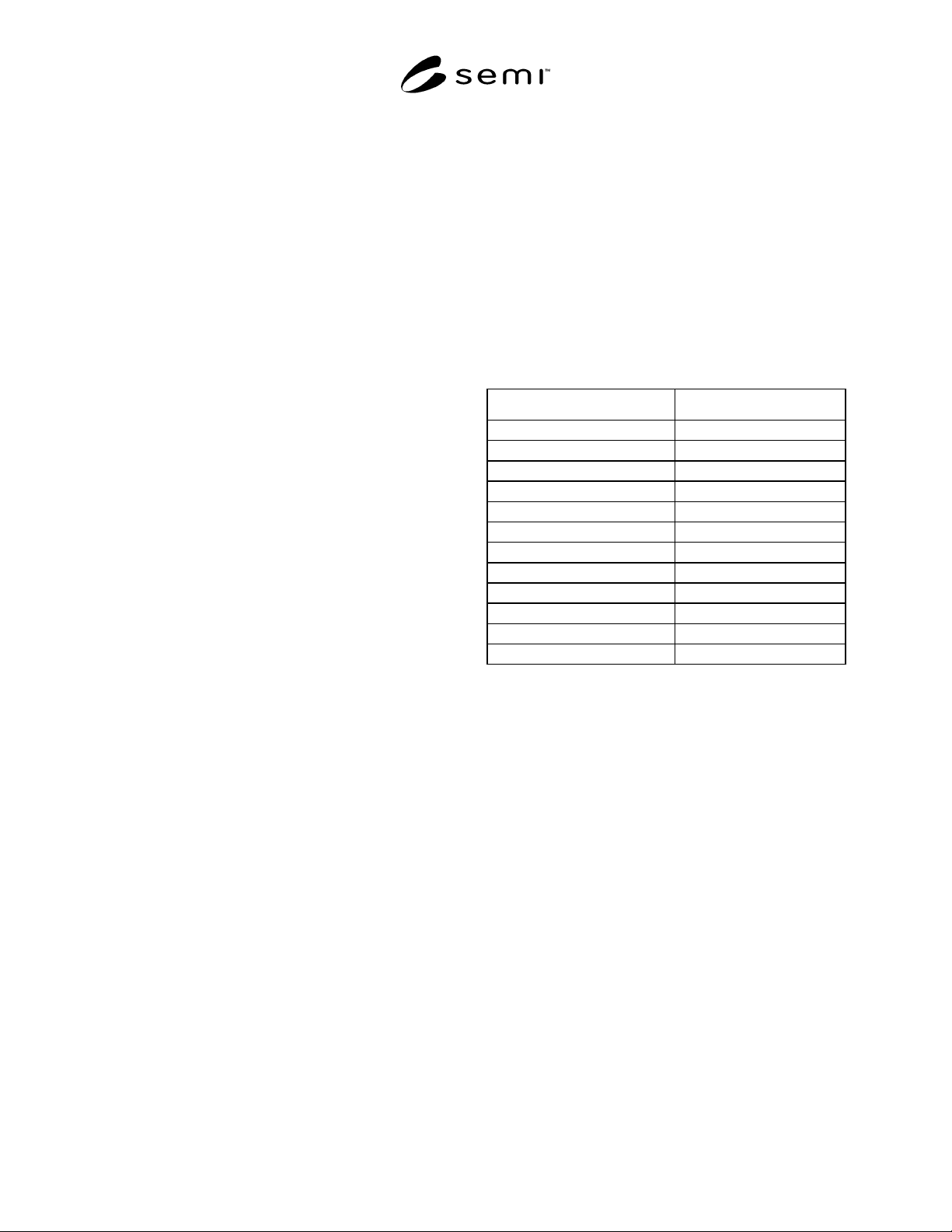
6.1 Chemicals should be classified according to the
categories and associated symbols as shown in Table 1.
6.2 Information on the properties of chemicals (other
than mixtures) should be obtained through
measurement or from literature, such as MSDSs.
Table 1 Classifications and Symbols
Classification Symbol
Flammable F
Pyrophoric P
Corrosive Acid CA
Corrosive Base CB
Toxic T
Highly Toxic HT
Oxidizer O
Inert I
Irritant IRR
Water Reactive WR
Unstable (Reactive) UR
Other Health Hazard OHH
6.3 A chemical should be assigned more than one
classification if it possesses more than one of the
characteristics listed in the table.
6.4 The properties of mixtures of two or more
chemicals should be determined experimentally or
estimated using accepted principles, such as those in
ISO 10156, CGA P20 and P23.
NOTE 3: The experimentation or estimation may be
performed by the user, or the user may rely on experimental
results or estimations by accepted principles performed by
others and reported in a document, such as an MSDS.
NOTE 4: A list of some chemicals used in the semiconductor
industry and their classification symbols appears in Related
Information 1.
7 Separation
7.1 Where practical, each chemical (except for inert
gases) should be contained in a separate cabinet.

SEMI S4-0304 © 1992, 2004 4
7.2 Containing Different Chemicals in a Cabinet
7.2.1 Except as described below, chemicals should be
contained in different gas cabinets if they do not
possess exactly the same classification symbols.
7.2.2 An inert (I) gas does not have to be separated
from any other chemical.
7.2.3 An irritant (IRR) chemical may be contained in a
gas cabinet with a chemical that is not an irritant, if the
remaining classification symbols are exactly the same.
7.2.4 A toxic (T) chemical may be contained in a gas
cabinet with a highly toxic (HT) chemical, if the
remaining classification symbols are exactly the same.
NOTE 5: Related Information 2 contains additional
information and references on the separation of chemicals, as
practiced or regulated in specific geographical regions.
8 Related Documents
8.1 SEMI Standards
F13 — Guide for Gas Source Control Equipment
F14 — Guide for the Design of Gas Source Equipment
Enclosures
S14 — Safety Guidelines for Fire Risk Assessment and
Mitigation for Semiconductor Manufacturing
Equipment
S18 — Environmental, Health, and Safety Guideline
for Silane Family Gases Handling
8.2 Building Officials and Code Administrators
7
BOCA National Fire Prevention Code
8.3 Compressed Gas Association
8
P-1 — Safe Handling of Compressed Gas in Containers
8.4 International Conference of Building Officials and
Western Fire Chiefs Association
9
Uniform Fire Code
8.5 Southern Building Code Conference International,
Inc
10
SBCCI Standard Fire Prevention Code
8.6 United States Code of Federal Regulations
11
7 Building Officials & Code Administrators International, Inc. , 4051
West Flossmor Road, Country Club Hills, IL 60477
8 Compressed Gas Association, 4221 Walney Road, 5th Floor,
Chantilly VA 20151-2923., Phone: 703-788-2700, Fax: 703-961-
1831, Email:
cga@cganet.com , www.cganet.com
9 International Fire Code Institute, 5360 Workman Mill Road,
Whittier, California 90601-2298, USA, www.ifci.org
10 Southern Building Code Congress International (SBCCI), 900
Montclair Road, Birmingham, AL 35213
29 CFR 1910.1200 — Hazard Communication
49 CFR 172.101 — Hazardous Materials Regulations
and Procedures
8.7 Dangerous Properties of Industrial Materials — N.
Irving Sax, Seventh Edition, 1988.
8.8 Matheson Gas Data Book — 7th Edition
12
NOTICE: SEMI makes no warranties or
representations as to the suitability of the Safety
Guidelines set forth herein for any particular
application. The determination of the suitability of the
Safety Guidelines is solely the responsibility of the
user. Users are cautioned to refer to manufacturer' s
instructions, product labels, product data sheets, and
other relevant literature, respecting any materials or
equipment mentioned herein. These Safety Guidelines
are subject to change without notice.
By publication of this Safety Guideline, Semiconductor
Equipment and Materials International (SEMI) takes no
position respecting the validity of any patent rights or
copyrights asserted in connection with any item
mentioned in this Safety Guideline. Users of this
guideline are expressly advised that determination of
any such patent rights or copyrights, and the risk of
infringement of such rights are entirely their own
responsibility.
11 The Office of the Federal Register, Washington, D.C. 20037
12 Available from www.mathesontrigas.com
SEMI S4-0304 © SEMI 1992, 2004 5
RELATED INFORMATION 1
CLASSIFICATIONS OF CHEMICALS
NOTICE: This related information is not an official part of SEMI S4 and was derived from task force members'
knowledge, S4-92, and various references. This related information was approved for publication by letter ballot on
December 4, 2003.
R1-1 Classifications of chemicals
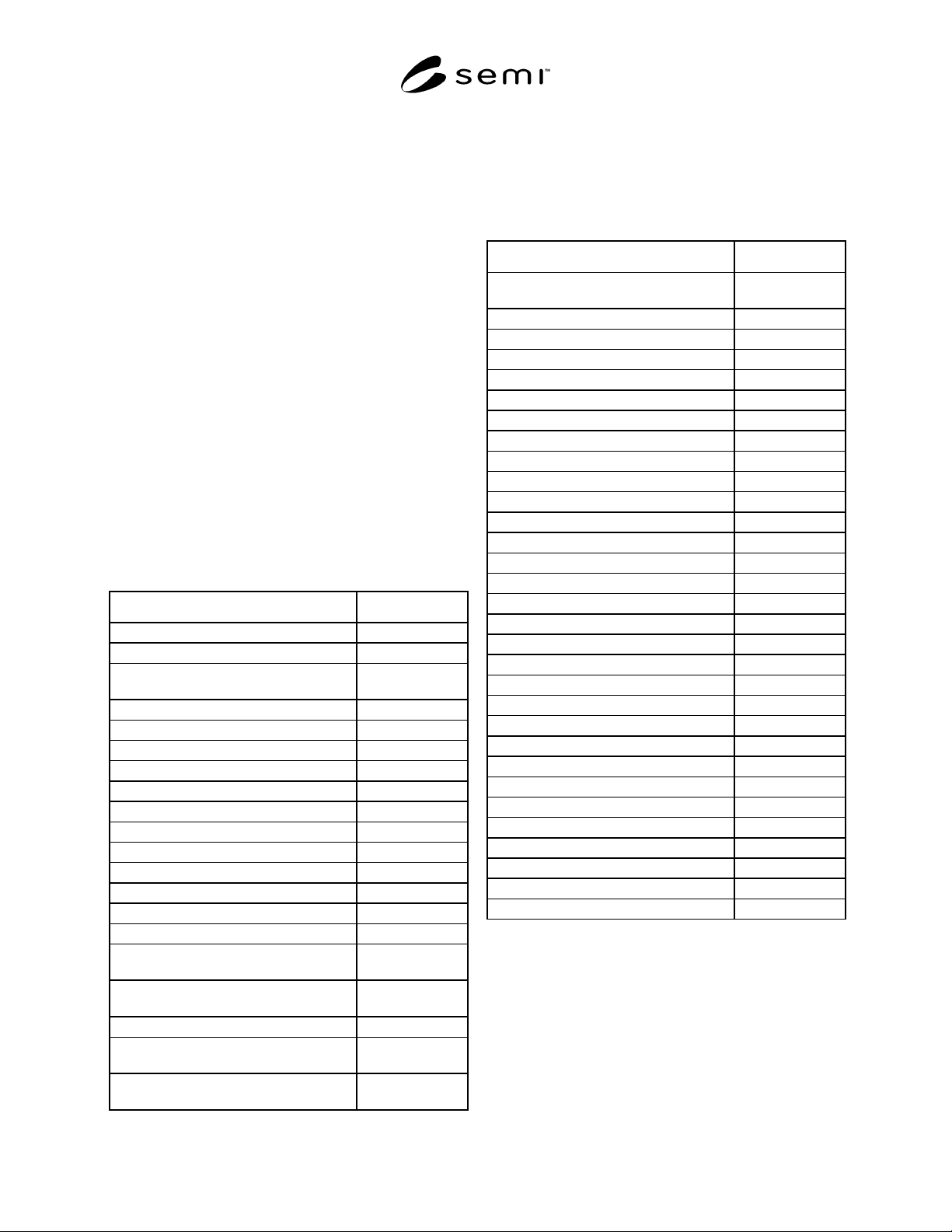
R1-1.1 Table R1-1 provides the classifications of some
chemicals in common use in the semiconductor and flat
panel industries. This table is sorted alphabetically by
name of the chemical. (See Table 1 for the definitions
of the symbols.)
NOTE 1: The classifications are presented in alphabetical
order for each chemical so that classifications can be
compared, and the second table could be created, more easily.
There is no technical significance to the order in which the
classifications are listed.
R1-1.2 Table R1-2 contains the same information as
Table R1-1, but it is sorted by classification to be a
more convenient way to identify chemicals that may be
contained in the same gas cabinet.
Table R1-1 Classifications, sorted by chemical
name
Chemicals Classifications
Ammonia (NH
3
) CB-F
Argon (Ar) I
Arsenic Pentafluoride (AsF
5
) CA-HT-OHH-
WR
Arsine (AsH
3
) F-HT-OHH
Boron Trichloride (BCl
3
) CA-WR
Boron Trifluoride (BF
3
) CA-T-WR
Carbon Dioxide (CO
2
) I
Carbon Tetrachloride (CCl
4
) OHH
Chlorine (Cl
2
) CA-O-T
Diborane (B
2
H
6
) HT-IRR-P-WR
Dichlorosilane (SiCl
2
H
2
) CA-P-T-WR
Diethyl Telluride ((C
2
H
5
)
2
Te) P-IRR
Diethyl Zinc ((C
2
H
5
)
2
Zn) CA-P-UR-WR
Dimethyl Zinc ((CH
3
)
2
Zn) CA-P-UR-WR
Germane (GeH
4
) F-IRR-T-UR
Halocarbon 11 (trichlorofluoromethane,
CCl
3
F)
I
Halocarbon 115 (chloropentafluoroethane,
C
2
ClF
5
)
I
Halocarbon 116 (hexafluoroethane, C
2
F
6
) I
Halocarbon 12 (dichlorodifluoromethane,
CCl
2
F
2
)
I
Halocarbon 13 (chlorotrifluoromethane,
CClF
3
)
I
Chemicals Classifications
Halocarbon 13B1
(bromotrifluoromethane, CBrF
3
)
I
Halocarbon 14 (tetrafluoromethane, CF
4
) I
Halocarbon 23 (fluoroform, CHF
3
) I
Helium (He) I
Hydrogen (H
2
) F
Hydrogen Chloride (HCl) CA
Hydrogen Fluoride (HF) CA-T
Hydrogen Sulfide (H
2
S) T-F-IRR
Methyl Chloride (CH
3
Cl) F-IRR
Methyl Fluoride (CH
3
F) F-IRR
Nitric Oxide (NO) IRR-O-T
Nitrogen (N
2
) I
Nitrogen Trifluoride (NF
3
) IRR-O
Nitrous Oxide (N
2
O) O
Oxygen (O
2
) O
Perfluoropropane (C
3
F
8
) I
Phosphine (PH
3
) HT-P
Phosphorous Pentafluoride (PF
5
) CA-T-WR
Silane (SiH
4
) P
Silicon Tetrachloride (SiCl
4
) CA-WR
Silicon Tetrafluoride (SiF
4
) CA-T-WR
Sulfur Hexafluoride (SF
6
) I
Trichlorosilane (SiCl
3
H) CA-F-UR
Triethyl Aluminum ((C
2
H
5
)
3
Al) P
Trimethyl Aluminum ((CH
3
)
3
Al) P
Trimethyl Antimony ((CH
3
)
3
Sb) F-T
Trimethyl Arsine ((CH
3
)
3
As) F-T
Trimethyl Gallium ((CH
3
)
3
Ga) P
Trimethyl Indium ((CH
3
)
3
In) P
Trimethyl Phosphine ((CH
3
)
3
P) F-T
Tungsten Hexafluoride (WF
6
) CA-T-WR
Note 1: Additional chemicals may be used at the present time or may
be suggested in the future. Any new chemical should be categorized
in a way that chemicals of similar chemical characteristics are treated.
If detailed chemical data are not available, the chemical should be
considered to present unkown hazards and should be stored with only
inert chemicals.